Alerts

-
3 minutes, 18 seconds
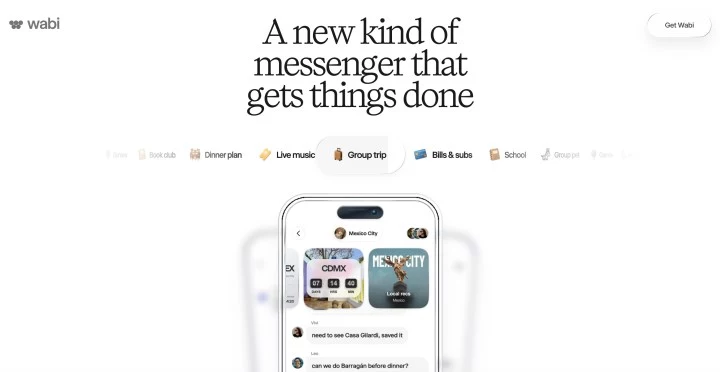
Before it became known for messaging, Wabi began life with a very different ambition. The company initially launched as an AI-powered app maker, a tool that let users build applications of their own. Rather than requiring deep programming knowledge, Wabi leaned on artificial intelligence to turn ideas into working apps, lowering the barrier to entry for anyone who wanted to create software.
This original vision positioned Wabi squarely in the growing wave of no-code and low-code platforms, where the promise was simple: describe what you want, and let the technology handle the heavy lifting. For a time, that was the identity of the product and the reason users sought it out.
Yet the app-making space proved to be a challenging one, and the company's trajectory would soon shift in an unexpected direction. Understanding this starting point is essential, because it explains where Wabi came from and why its later transformation was so notable. The pivot that followed would redefine the product entirely.
Wabi's AI-powered app maker represented a bold experiment in letting anyone build software simply by describing it. Yet the company has since shifted its focus, pivoting away from app creation and toward a messaging experience. This is a notable change in direction, moving the product from a tool for generating apps to a platform centered on conversation.
For users who followed Wabi's earlier ambitions, the pivot signals a reassessment of where the product's value truly lies. Instead of helping people build standalone apps, Wabi now concentrates on messaging as its core offering. The original app-making functionality is no longer the centerpiece of what Wabi does.
Such a transition raises questions about how the two visions relate. The messaging experience appears to be the company's chosen path forward, while the app maker recedes into the background. What remains to be seen is how this messaging focus will be received by those who first came to Wabi for its app-building capabilities.
The new messaging experience sits at the heart of Wabi's updated offering. Rather than asking users to build and configure an app, Wabi now places the interaction inside a familiar chat interface, where the assistant responds to plain-language requests.
This shift changes what the product fundamentally is. The app-building layer that defined Wabi's earlier incarnation is no longer the primary surface users engage with; messaging is. The experience is designed so that creating and using small tools happens conversationally, without the user stepping through a separate builder.
Key aspects of the messaging experience include:
By centering the product on messaging, Wabi positions the chat itself as the place where value is delivered. The experience is not an add-on to the original app maker but the core of what the company now offers, shaping how users discover, create, and interact with the tools Wabi provides.
The shift marks a change in direction for Wabi, moving away from its initial app maker positioning. What began as a tool for building and publishing apps is now something different: a messaging product. That is a notable repositioning, and it raises questions about how the company sees its own future.
For users who arrived expecting an app maker, the pivot may be unwelcome. It signals that Wabi's priorities no longer sit with the original promise that drew them in. The company is, in effect, asking its audience to follow it somewhere new.
It also suggests a broader bet. By embracing messaging, Wabi appears to be chasing a category with different competitors, different expectations and a different kind of user. Whether that bet pays off will depend on how the messaging experience itself is received — but the direction of travel is now clear.










Comment