
Alerts
-
3 minutes, 1 second
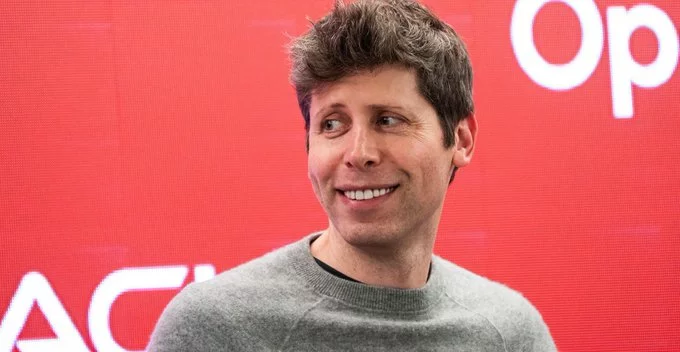
OpenAI's recent mathematical breakthroughs have sparked an uncomfortable question: were they built on other people's ideas? Mathematicians are now demanding proof that the company did not use their work, and at least one mathematician has accused OpenAI of "dishonesty" following several big breakthroughs. The dispute has turned a technical achievement into a question of research ethics, with critics arguing that the burden of proof should fall on OpenAI rather than on the mathematicians who suspect their results were absorbed without credit. Until the company provides a transparent account of how its models were trained and which sources informed them, the allegations are likely to shadow its mathematical claims. For a research community that depends on attribution, the stakes go beyond one company's reputation.
The tension escalated when another mathematician publicly accused OpenAI of "dishonesty" following several major breakthroughs attributed to its AI systems. The accusation did not emerge in isolation; it came amid growing scrutiny of how OpenAI has presented its mathematical achievements and whether those results were produced independently of existing human work.
The critic's charge of dishonesty reflected a deeper unease within the mathematical community. Researchers who had spent years developing theorems and proofs were unsettled to see AI models announce comparable results, often without clear acknowledgment of the human scholarship that preceded them. For these mathematicians, the issue was not merely technical but ethical: the line between genuine discovery and unattributed borrowing had become dangerously blurred.
OpenAI has not publicly responded to the specific allegation of dishonesty. Nevertheless, the accusation has amplified calls for transparency, pushing the debate beyond questions of capability and toward questions of credit, integrity, and the standards by which AI-driven mathematical breakthroughs should be judged.
At the centre of the dispute is a simple demand: show the receipts. Mathematicians are calling on OpenAI to demonstrate that its models were not trained on their work, and they are not satisfied with assurances alone. The demand for proof reflects a deeper worry that once a model has absorbed a body of research, no one outside the company can easily verify what went in.
Critics argue that the burden should fall on OpenAI, not on the mathematicians. Several have pointed out that the company could, in principle, release training data documentation or allow independent audits. So far, they say, no such evidence has been forthcoming.
For many in the field, the issue is not merely technical but ethical. If a model’s capabilities rest partly on scraped papers and textbooks, the people who wrote them deserve to know. Until OpenAI provides verifiable proof, the accusation of dishonesty will continue to hang over the debate.
The dispute did not arise in isolation. It followed a run of significant advances from OpenAI, and the timing helps explain why the reaction has been so sharp. Each new result raised the same uncomfortable question: how much of this was built on work that came before, and was that debt acknowledged?
That question carries particular weight in mathematics, a field built on attribution. A proof is only as valuable as its provenance, and credit is the currency of the discipline.
So when mathematicians demand proof that their work was not used, they are not simply protecting their own reputations. They are defending a norm that makes the whole enterprise function.
The accusation of dishonesty, then, is less about any single model output than about whether a culture of attribution can survive contact with systems that absorb everything and cite nothing.






Comment