
-
4 minutes, 24 seconds
Can artificial intelligence really understand your emotions? AI emotion tracking, also called emotional AI, has advanced rapidly since its conceptual beginnings in 1995 with Rosalind Picard’s Affective Computing. Today, this technology promises to recognize feelings from facial expressions, voice tones, and text patterns. But while AI can spot certain emotional cues, it’s far from perfectly reading minds.
This article explores how AI tracks emotions, the technology behind it, its real-world applications, and the ethical questions it raises.
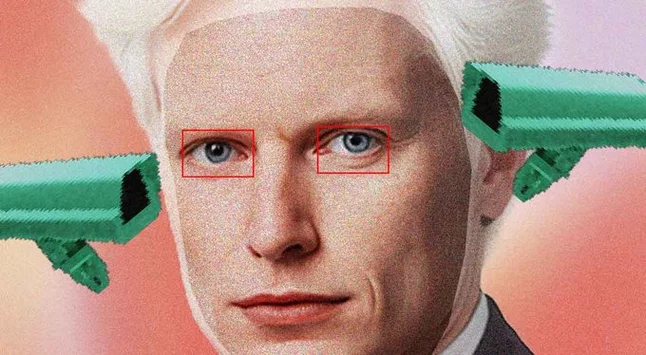
At the core, AI learns to recognize emotions by analyzing massive datasets where human feelings are labeled as measurable data points. Facial expressions, speech intonations, and written words are converted into numerical representations that AI algorithms can process.
Yet human emotions are complex and often unpredictable. A smile might mask discomfort, and a frown doesn’t always signal anger. Because emotions are context-dependent, AI relies on patterns, not certainty, which makes its “emotional intelligence” inherently limited.
AI emotion tracking gained wider recognition during the COVID-19 pandemic, when airports and businesses sought new ways to assess human experiences remotely. Athens International Airport, for example, used emotion AI to measure passenger satisfaction. Similarly, some employers in the U.S. monitored remote workers’ moods to optimize productivity.
Beyond airports and workplaces, emotion AI is appearing in customer service tools, wearable devices, and even mental health apps. These systems can suggest responses or services tailored to emotional cues, promising a more personalized digital experience.
Despite its potential, emotion AI faces significant challenges. Algorithms may misinterpret emotions across different demographic groups, often underperforming for people of color or those with nonstandard facial expressions.
Moreover, AI cannot reliably capture the nuance of human feelings. Context, cultural norms, and personal experiences all influence emotion, and most systems cannot fully account for these subtleties. As a result, emotion AI can produce biased or inaccurate assessments, limiting its practical and ethical use.
AI emotion tracking relies on highly sensitive biometric data, including facial movements, voice recordings, and text analysis. Misuse of this information could expose individuals to privacy risks, discrimination, or even emotional manipulation.
Some governments and organizations have already restricted or banned certain emotion recognition technologies to prevent misuse. As AI continues to evolve, balancing innovation with privacy and fairness remains a critical challenge.
Experts predict that emotion AI will become increasingly integrated into everyday technology, from virtual assistants to healthcare tools. While it may enhance personalization and improve services, its limitations underscore the importance of human oversight.
Ultimately, AI may help us better understand emotional patterns, but it will not replace genuine human empathy. Its value lies in augmenting human decision-making, not interpreting feelings in isolation.
AI emotion tracking offers a glimpse into a future where technology can respond to human feelings, yet it comes with notable limits and ethical concerns. Understanding how AI reads emotions—and where it falls short—helps individuals, businesses, and policymakers make informed choices about this powerful but imperfect technology.

2.5K articles

1.3K articles

34 articles

28 articles














Comment