Aether OS Brings a Full Desktop Experience to Your Browser
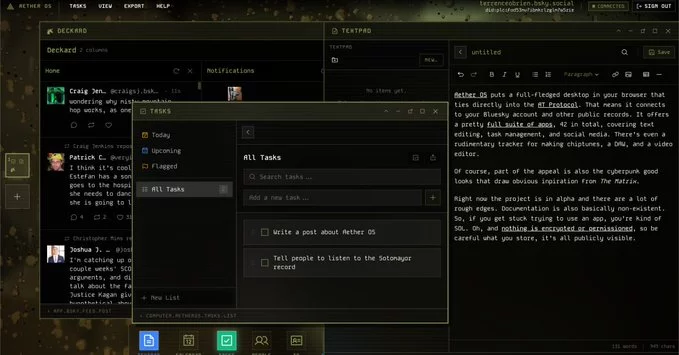
Ever wondered what it would be like to run an entire computer without leaving your browser? Aether OS delivers exactly that. Built on the AT Protocol, this experimental platform connects directly to your Bluesky account and other public records, letting users explore a browser-based desktop environment with full app functionality. While it’s still in alpha, the ambitious project offers a glimpse of a futuristic, cyberpunk-style workspace that runs entirely online.
A Suite of Apps at Your Fingertips
Aether OS isn’t just a visual gimmick—it’s surprisingly functional. The platform currently features 42 apps covering a wide range of uses, from text editing and task management to social media integration. For creative users, there’s even a basic tracker for chiptunes, a digital audio workstation (DAW), and a simple video editor. This variety allows users to experiment with both productivity and creativity without installing anything locally.
The appeal of Aether OS lies in its diversity. Casual users can post to social feeds, manage tasks, or write documents, while hobbyists can explore multimedia projects. For a browser-based desktop, the level of functionality is unexpectedly impressive.
Cyberpunk Aesthetics and Matrix Inspiration
Aether OS also scores points for style. Its visual design draws clear inspiration from iconic cyberpunk aesthetics and the digital rain of The Matrix. Dark themes, neon highlights, and retro-futuristic UI elements create an immersive experience that makes using the platform feel like stepping into a digital world. This attention to aesthetics sets it apart from conventional web apps, making the browser environment feel like a mini operating system of its own.
Current Limitations: Alpha Stage and Documentation Gaps
Despite its exciting possibilities, Aether OS is far from polished. The project remains in alpha, which means users will encounter bugs, crashes, and unfinished features. Documentation is sparse, so navigating the full suite of apps often requires trial and error. Anyone diving in should be prepared for a learning curve.
Security is another concern. Currently, nothing is encrypted or permission-protected, meaning all content is publicly visible. Users need to exercise caution when storing sensitive information or private files. While this openness aligns with the experimental, decentralized ethos of the AT Protocol, it also means Aether OS isn’t ready for confidential or professional work.
Why Aether OS Matters
Even with its rough edges, Aether OS offers a compelling vision of the future of computing. By integrating a full desktop environment into a web browser and connecting it to decentralized protocols, it shows how the line between local and cloud computing could blur. For enthusiasts, developers, and early adopters, it’s a playground for experimentation—a place to explore productivity, creativity, and social networking in one unified space.
Its cyberpunk design, diverse app ecosystem, and browser-based functionality position Aether OS as a unique project to watch. While mainstream adoption may be years away, the platform provides a valuable glimpse into what decentralized, browser-native computing could look like.
Aether OS may be impractical for daily use today, but its ambition is undeniable. With 42 apps, AT Protocol integration, and a visually striking cyberpunk interface, it represents a bold experiment in how desktops, browsers, and social networks can merge. Users willing to tolerate alpha-level quirks will find a playground of creativity and productivity unlike anything else online.
For those curious about the future of web-based computing, Aether OS is worth exploring—even if just for the thrill of running a full desktop in your browser.








Comment