
Alerts
-
3 minutes, 10 seconds
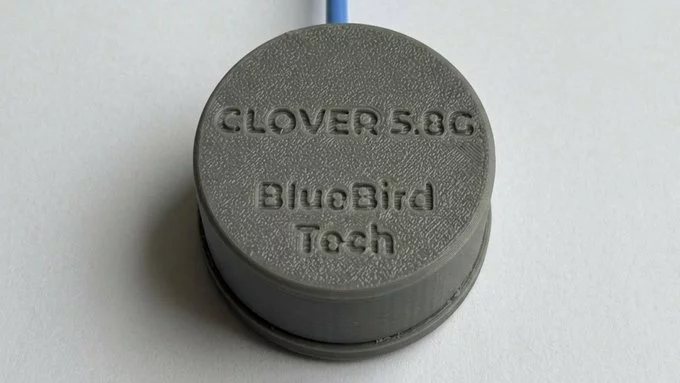
A Ukrainian company has unveiled a new drone antenna that is remarkably compact, designed to address the ongoing challenge of size and weight in unmanned aerial systems. This miniature component is engineered for integration into small drones, where every gram matters for flight endurance and maneuverability. The antenna’s primary purpose is to maintain reliable communication links without compromising the aircraft’s aerodynamic profile or payload capacity. By shrinking the physical footprint, the design enables drones to carry additional sensors or batteries while preserving signal integrity. This development is particularly relevant for tactical and reconnaissance missions, where discreet, low-profile equipment is essential. The unveiling signals a step forward in miniaturizing critical drone hardware, offering a practical solution for operators who need to maximize performance in constrained spaces. As drone technology evolves, such compact components become vital for next-generation platforms, promising enhanced connectivity in a smaller form factor.
The standout characteristic of this antenna is its remarkably compact form factor. According to the source, the entire antenna measures just 2.5 mm × 2.5 mm, with a height of 1.2 mm. This makes it one of the smallest antennas available for its frequency range. In terms of weight, it is exceptionally light at only 0.01 grams, a critical factor for drone applications where every gram affects flight time and payload capacity.
Technically, the antenna is designed to operate in the 5.8 GHz ISM band, which is commonly used for FPV video transmission. It features a monopole design and requires a 50-ohm impedance match for optimal performance. The source specifies that it is manufactured using a ceramic-based material, which contributes to its stability and temperature resilience. While no detailed gain figures are provided in the source, the design is optimized for short-range, high-frequency communication, prioritizing a minimal footprint over long-distance range.
The primary advantage of this tiny antenna lies in its ability to significantly extend the operational range of drones. By efficiently capturing and transmitting signals at a higher gain, it allows the aircraft to maintain a stable, high-quality link with the ground controller at distances that would previously cause signal degradation or complete loss. This enhanced range directly translates to broader mission coverage, enabling inspections, mapping, and search operations over larger areas without the need to reposition the pilot or vehicle.
Beyond sheer distance, the antenna’s design improves overall signal integrity. It reduces multipath interference—where signals bounce off surfaces and cause confusion—resulting in a cleaner, more reliable data stream for video downlink and command uplink. This means fewer dropouts, less latency, and more precise control, even in challenging urban or wooded environments. The result is a more dependable platform for critical tasks, where a lost connection is not just an inconvenience but a potential safety hazard.
The advent of this tiny antenna technology carries distinct implications for both small drone operations and larger military or commercial applications. For small drones, the reduced size and weight directly address payload constraints, potentially enabling longer flight times or the addition of other sensors. In military contexts, the antenna’s performance could enhance secure, low-probability-of-intercept communications for tactical units, while commercial operators might benefit from more reliable beyond-visual-line-of-sight (BVLOS) data links for inspection or delivery missions.
Looking ahead, the design’s scalability suggests it could be adapted for a wider frequency range or integrated into swarming platforms. However, the source notes that the technology is still in a research phase, meaning field deployment is not immediate. Further work is needed to assess durability in harsh environments and to miniaturize supporting electronics. The ability to maintain high efficiency in such a compact form factor is the key enabler, but real-world adoption will depend on overcoming these engineering hurdles.









Comment