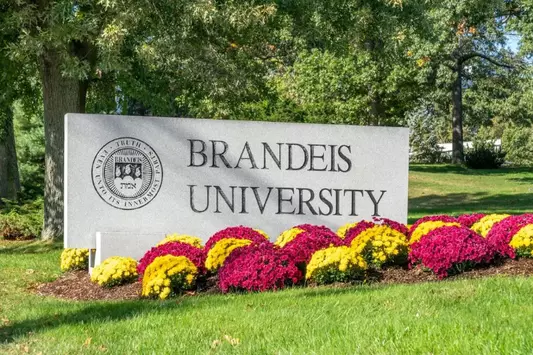
A college degree has rarely faced this much scrutiny, and students everywhere are asking the same question: Will my education actually prepare me for work? Rising tuition, fewer internship postings, and employer demands for practical skills have pushed universities into a new reality. The Brandeis Plan is one of the boldest responses yet, aiming to blend liberal arts education with career readiness starting from day one. In September 2025, Brandeis University unveiled a major redesign meant to close the gap between classrooms and careers.
Brandeis President Arthur Levine argues that the traditional college structure no longer fits today’s economy. The U.S. is moving from an analog industrial system into a global digital knowledge economy, where technology and information shape nearly every job sector. Levine compares this shift to the Industrial Revolution, the last time higher education had to reinvent itself at scale. In his view, colleges must evolve again or risk becoming disconnected from modern workforce needs. The Brandeis Plan is built around that urgency.
Instead of simply defending liberal arts as timeless, Brandeis is redesigning them for relevance. Levine says the goal is not to abandon deep academic learning, but to ensure it translates into lifelong adaptability. The university’s new initiative integrates rigorous coursework with career competencies students can demonstrate beyond grades alone. This approach reflects growing skepticism among Americans, with nearly half saying their major did not prepare them for the workforce. Brandeis is betting that reinvention is the only path forward.
Levine’s perspective is shaped by decades of leadership across major education institutions. Before Brandeis, he served as president of Teachers College at Columbia University and led the Woodrow Wilson National Fellowship Foundation. He has also published 13 books researching how colleges change over time. After arriving at Brandeis, Levine met with administrators, students, and more than 160 faculty members to understand what needed fixing. Those conversations became the foundation for the Brandeis Plan.
One of the biggest shifts in the Brandeis Plan is how early career development begins. Instead of waiting until junior year internships, students will engage with career planning from the moment they arrive. The redesigned core curriculum emphasizes the competencies students need not just now, but 10 to 15 years into the future. Levine says Brandeis will assess students based on measurable skills, not just academic knowledge. It’s a model built around employer priorities like communication, critical thinking, and problem-solving.
A standout feature of the Brandeis Plan is a career-competency “second transcript.” This document will track skills and experiences gained outside traditional coursework, including projects, mentorship, experiential learning, and leadership roles. The goal is to help students show employers what they can actually do, not just what classes they completed. With internships declining and competition rising, Brandeis wants students to graduate with proof of workplace readiness. It’s an attempt to make learning visible in new ways.
Levine stresses that real-world experience should not be limited to internships alone. Brandeis plans to expand experiential learning through case studies, simulations, and applied projects powered by emerging tools like AI and virtual reality. This is especially important because more than 40% of full-time students work part time and may not have access to unpaid opportunities. The university’s advising structure will help students find career-building experiences that fit their financial realities. The Brandeis Plan is designed for flexibility, not privilege.
Levine believes the initiative will succeed, but Brandeis is watching closely. Success will be measured through student feedback, employer response, rising admissions interest, and whether other universities adopt similar frameworks. Levine describes the model as having “one foot in the library and one foot in the street,” balancing intellectual depth with practical relevance. If employers recognize Brandeis graduates as uniquely prepared, the plan could become a blueprint for broader reform. The stakes are high, but so is the ambition.
The Brandeis Plan reflects a growing national demand for colleges to take workforce preparation seriously. Surveys show HR leaders want schools to play a stronger role in career training, while many graduates say they learn more in their first months on the job than in college. Brandeis is trying to move that learning earlier, embedding career readiness directly into the academic core. The message is clear: preparing students for work and preparing them for life don’t have to be separate missions. In an era of disruption, Brandeis is making reinvention the new definition of liberal arts.
Access our platform effortlessly on-the-go through our user-friendly mobile apps.





Comment