AI is no longer just a workplace disruptor—it’s becoming a daily collaborator. Employees searching for answers about job security, productivity, and the future of work are finding a different narrative emerging in 2026. Fear of replacement is giving way to cautious optimism as AI tools integrate directly into workflows. Experts now describe AI less as software and more as a coworker. This reframing has changed how workers interact with technology. Instead of resisting it, many are learning how to work alongside it.
Why Experts Say AI Will Be Your Favorite Coworker
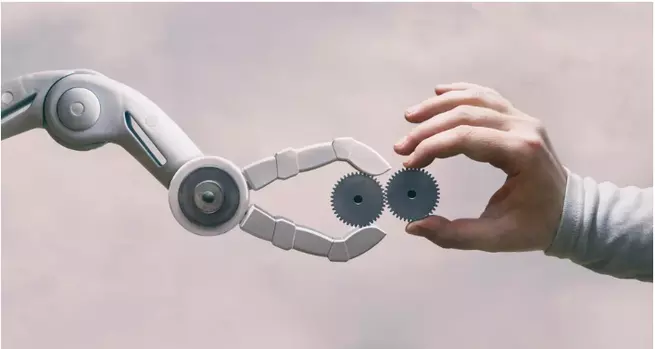
The phrase “AI as coworker” isn’t about machines replacing people. It’s a metaphor for how AI supports thinking, research, and decision-making. Business leaders say AI now functions like a junior colleague—one that needs guidance and supervision. Teams that train AI and refine its outputs gain a clear advantage. Those who ignore it risk falling behind. Collaboration, not competition, is becoming the dominant model.
AI as a Silent Partner That Amplifies Human Judgment
By 2026, AI is expected to be embedded into most workdays. Experts compare it to having a research assistant, strategist, and editor available on demand. The strongest results come from teams that treat AI as a collaborator rather than a shortcut. AI excels at speed and pattern recognition, but humans provide context and judgment. Together, they create stronger outcomes. This partnership is redefining productivity across industries.
Human Skills Matter More as AI Takes Over Tasks
As AI handles more operational work, human skills are becoming more valuable, not less. Trust, communication, creativity, and emotional intelligence are emerging as core differentiators. Leaders report that innovation depends on connection, not automation alone. These skills were often undervalued because they were hard to measure. AI is forcing organizations to recognize their importance. Work is becoming more human as technology advances.
AI Is Redefining Internal Communication and Trust
One of AI’s biggest impacts is how teams stay informed and aligned. AI-powered communication tools ensure employees get the right information at the right time. This creates clarity and reduces friction as organizations scale. Productivity improves, but so does trust. Experts say alignment—not speed alone—will define high-performing companies. AI becomes the connective tissue that keeps teams moving together.
From Assistants to Agents: How AI Work Is Evolving
AI is quickly moving beyond simple copilots into autonomous agents. These systems can retain context, break work into tasks, and coordinate across tools. Experts caution that speed without oversight creates risk. Human judgment remains essential to guide outcomes. The future belongs to teams that pair AI’s velocity with human accountability. This balance turns drafts into dependable results.
New Roles Will Emerge in the AI-Powered Workplace
As AI agents grow more capable, entirely new jobs are forming. Organizations are already preparing for roles like AI operations leaders and workflow architects. Success will no longer be measured by efficiency alone. It will depend on how saved time is reinvested into people and skills. Adaptability and human–AI fluency are becoming strategic advantages. Workforce agility is now tied directly to growth.
Why the Future of Work Is Evolving, Not Disappearing
AI may eliminate repetitive tasks, but it won’t remove the human need to contribute. Judgment, empathy, and strategic thinking remain irreplaceable. Experts agree that the most valuable employees will guide, refine, and elevate AI outputs. For organizations that embrace this shift, work doesn’t vanish—it improves. And for many workers, AI won’t feel like a threat. It may become their favorite coworker after all.














Comment