As searches surge for “how to lead through uncertainty” and “what modern employees expect from leaders,” a new truth is reshaping the leadership landscape: credibility matters more than confidence. In a world defined by AI disruption, geopolitical volatility, and the constant demand for speed, leaders can no longer rely on projecting certainty. Employees aren’t looking for perfect answers—they’re looking for leaders who act with courage while acknowledging what they don’t yet know. This shift marks one of the most significant leadership transformations heading into 2026. And the leaders who learn to navigate uncertainty with humility will be the ones who earn long-term trust.
For decades, leadership training rewarded the illusion of steadiness. Executives were taught to mask doubt, deliver polished messages, and maintain an image of unwavering confidence. But today, overconfidence is no longer a sign of strength—it’s a liability. Employees are more informed, more observant, and more aware of the gaps between what leaders say and what is actually true. That gap becomes a credibility drain. In this environment, pretending to “have it all figured out” only accelerates distrust. Workers want grounded leaders who can navigate ambiguity without manufacturing certainty that doesn’t exist.
One of the biggest performance killers in organizations is avoidance—waiting for clarity, delaying conversations, or hesitating to act on truths already known. The gap between insight and action is what leadership expert Shannon Minifie calls the “courage gap,” the distance between what leaders know and what they actually do. Closing that gap can transform teams. PepsiCo CEO Ramon Laguarta demonstrated this when he launched “truth tours,” visiting frontline employees to uncover operational failures others avoided naming. Acting on those hard truths helped accelerate the company’s turnaround. Leaders who reduce the delay between seeing reality and acting on it create cultures where truth surfaces early, not after the damage is done.
In uncertain environments, leaders don’t know what they’re wrong about. That’s why transparency matters. When pressure mounts, leaders naturally lean on past experience instead of widening their perspective. But the strongest leaders intentionally build space for pushback by asking: What’s the best counterargument? Where might my thinking be flawed? Who sees this differently? Alan Mulally’s turnaround at Ford became a case study in this principle. His message—“You can’t manage a secret”—encouraged leaders to surface problems early. Even when the truth was uncomfortable, the transparency led to faster alignment. Making your reasoning visible gives people something to engage with, which increases trust even when decisions are difficult.
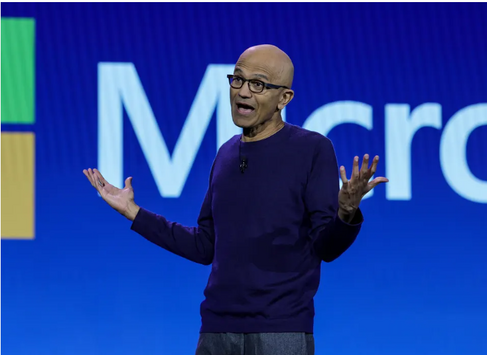
Employees don’t expect leaders to predict the future. They expect leaders to be anchored in their values while navigating it. Performative certainty—the old posture of “everything is under control”—now increases anxiety and widens the trust gap. Self-certainty, however, is different. It means being clear about the principles and priorities that guide decisions when data is incomplete. Satya Nadella captured this shift when he told managers to get “comfortable not having all the answers.” His openness helped reset Microsoft’s culture toward curiosity and continuous learning. Using statements like “Here’s what we know, here’s what we don’t know, and here’s what we’re optimizing for” feels steadier and more honest than false confidence.
Leadership in 2026 is not defined by fearlessness—it’s defined by the willingness to act even while doubt is present. When leaders model grounded courage, teams mirror it. Employees take more initiative, voice risks earlier, and innovate without fear of punishment for being wrong. This cultural effect becomes a competitive advantage. In a marketplace where rapid learning matters more than rigid planning, courage is a multiplier. It unlocks the speed, clarity, and transparency organizations need to survive disruption.
The leaders most likely to thrive in 2026 won’t be the ones who claim to know all the answers. They’ll be the ones who ask better questions, move faster on the truths they already see, and invite challenge rather than avoid it. They’ll be honest about uncertainty while remaining steady about their values. In a world where conditions change overnight, credibility—not certainty—is what people cling to. And the leaders who choose courage over performance will shape the workplaces, cultures, and organizations that endure the next era of change.
𝗦𝗲𝗺𝗮𝘀𝗼𝗰𝗶𝗮𝗹 𝗶𝘀 𝘄𝗵𝗲𝗿𝗲 𝗿𝗲𝗮𝗹 𝗽𝗲𝗼𝗽𝗹𝗲 𝗰𝗼𝗻𝗻𝗲𝗰𝘁, 𝗴𝗿𝗼𝘄, 𝗮𝗻𝗱 𝗯𝗲𝗹𝗼𝗻𝗴. We’re more than just a social platform — from jobs and blogs to events and daily chats, we bring people and ideas together in one simple, meaningful space.



Comments