If you’ve ever wondered why emotional intelligence matters in leadership—or how mindfulness improves it—new insights from inside a top biotech company offer a clear answer. Leaders today face rising pressure to stay composed, read the room and create environments where people can thrive. Searches like “how does emotional intelligence make better leaders?” and “does mindfulness improve leadership?” reflect growing curiosity about this skillset. And according to leadership expert Renny Bloch, EQ is no longer optional. It’s now the human engine behind trust, influence and organizational health.
Most employees have experienced it: the shift in a room when a stressed leader walks in. Conversations fade, energy drops and the tone changes instantly. This moment, Bloch explains, is emotional contagion—the way a leader’s mood spreads to everyone around them. Grounded in the research popularized by Daniel Goleman, Richard Boyatzis and Annie McKee, the concept shows how a leader’s emotional state sets the tone for performance. At Regeneron, where Bloch leads global learning and leadership development, understanding this dynamic is foundational. His mission is to help scientists, engineers and technical experts strengthen human-centered capabilities so great science can flourish.
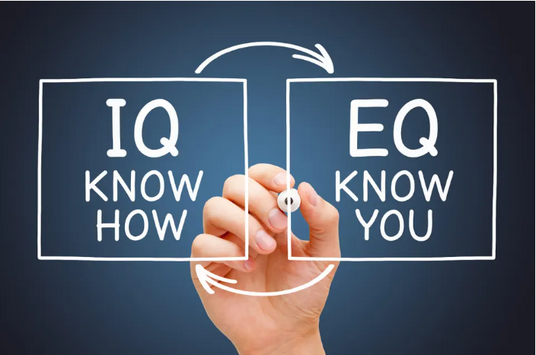
In highly technical environments, “IQ is the price of admission,” Bloch says. But emotional intelligence is what differentiates average leaders from exceptional ones. Regeneron invests heavily in EQ, offering workshops for rising talent, coaching for managers and long-term development cohorts for executives. Training begins with core concepts—what EQ is, why it matters and the four foundational domains. From there, leaders explore deeper skills like emotional literacy, conflict navigation and relationship management. Storytelling, influence and team dynamics all weave EQ skills into real-world leadership behaviors.
A pivotal moment transformed how Bloch thinks about emotional intelligence. After long workdays, he often walked into his home drained, unintentionally signaling to his daughters that he needed space. A mindfulness teacher introduced him to “a minute to arrive,” a practice of pausing before entering a room to reset and become present. This simple shift became a bridge between mindfulness and EQ, helping him regulate emotions and show up intentionally. As he introduced mindfulness practices into leadership programs, he saw measurable changes—better listening, calmer responses and more grounded decision-making. The ability to return focus during meditation mirrors the same muscle required for emotional self-regulation.
According to Bloch, many companies lean too heavily on theory and not enough on lived experience. He urges organizations to start with research but immediately connect it to real moments people recognize. One of his most effective exercises is the “Best Leader” activity, where participants list traits of leaders they admire and sort them into EQ, IQ or technical skill. Almost every time, the majority fall into emotional intelligence. Stories, examples and relevant scenarios help employees see EQ not as a soft skill but as the backbone of effective leadership.
At Regeneron, one capability rises above the rest: self-awareness. Most people believe they’re self-aware, but the data shows otherwise. To close this gap, Bloch teaches three grounding strategies leaders can apply immediately. First, he emphasizes self-compassion—recognizing limits and allowing room to pause or say “I don’t know.” Second, he teaches leaders to take one intentional breath to lower cortisol and create space to respond instead of react. Third, he reminds leaders that emotional responses are choices; no one can determine how you feel without your participation. These simple practices build powerful habits that strengthen emotional regulation.
At the executive level, Bloch’s work expands from individual EQ to team emotional intelligence. A group can consist of highly emotionally intelligent individuals yet still struggle collectively. That’s because team EQ requires cohesion, shared norms and awareness of emotions at the group level. Emotionally intelligent teams monitor their collective mood, manage internal and external relationships and create psychological conditions for high performance. These dynamics become especially important in high-stakes environments like biotechnology, where collaboration drives innovation.
For leaders in the life sciences, EQ is more than a leadership preference—it’s mission-critical. Scientific progress depends on communication, trust, psychological safety and the ability to navigate complex interpersonal dynamics. Bloch’s message is clear: emotional intelligence is not innate. Unlike IQ, EQ skills are learnable through intention, practice and self-reflection. As mindfulness continues to shape how leaders regulate emotions and connect with others, the intersection of EQ and mindfulness is redefining what great leadership looks like in modern science-driven organizations.
𝗦𝗲𝗺𝗮𝘀𝗼𝗰𝗶𝗮𝗹 𝗶𝘀 𝘄𝗵𝗲𝗿𝗲 𝗿𝗲𝗮𝗹 𝗽𝗲𝗼𝗽𝗹𝗲 𝗰𝗼𝗻𝗻𝗲𝗰𝘁, 𝗴𝗿𝗼𝘄, 𝗮𝗻𝗱 𝗯𝗲𝗹𝗼𝗻𝗴. We’re more than just a social platform — from jobs and blogs to events and daily chats, we bring people and ideas together in one simple, meaningful space.



Comments