
Alerts
-
6 minutes, 2 seconds
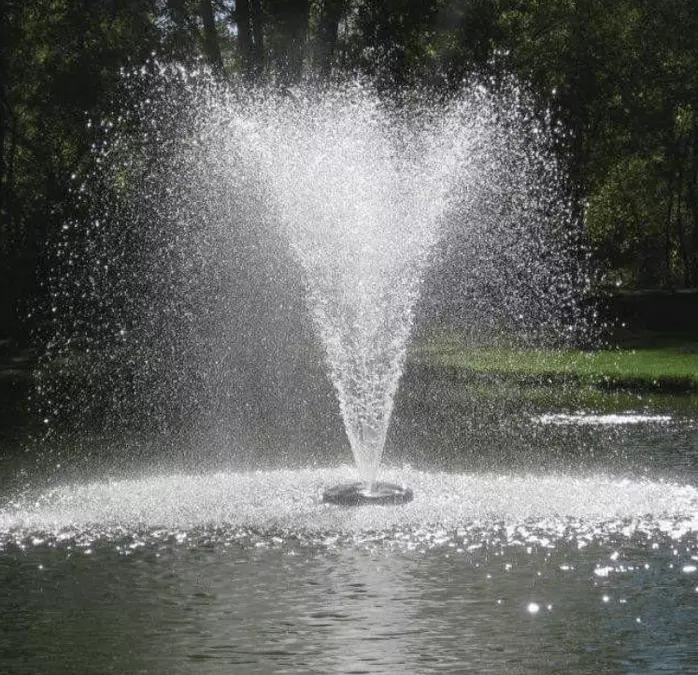
Pond fountains can serve both decorative and functional purposes, creating visible water movement while helping circulate water throughout a pond. The right fountain depends on factors such as pond dimensions, water volume, desired spray pattern, electrical availability, and the purpose of the installation. Horsepower is one of the specifications commonly used to compare fountain systems, but it should not be considered in isolation. A 1/2 hp pond fountain can provide a useful balance between water movement, fountain display, and aeration for appropriately sized ponds.
Horsepower indicates the motor's power rating, but it does not by itself determine how much water a fountain will move or how high it will spray. Flow rate, nozzle design, head pressure, and the pump's operating conditions also influence performance.
For example, a current 1/2 HP pond fountain model from Friendly Fountains uses a 5,300 gallons-per-hour pump, operates on 120V power, and includes a 100-foot electrical cord. The manufacturer identifies it for mid-sized ponds and describes the system as providing both water circulation and a visible fountain display.
This illustrates why buyers should review the complete pump specifications instead of comparing horsepower alone.
A floating fountain typically places a submersible pump on a floating platform. The pump draws water from the pond and directs it upward through a nozzle. The water then falls back into the pond, creating surface movement and helping distribute oxygen through the water.
The floating platform allows the fountain to remain on the water's surface as water levels change. Mooring lines can be used to keep the unit positioned in a desired area of the pond.
The nozzle has a major effect on the appearance of the fountain. Different nozzle configurations can produce different spray shapes, heights, and widths, allowing the same pump system to create different visual effects.
Water movement is one of the practical reasons pond owners install fountains. When water is circulated between the surface and the surrounding pond, it can help reduce areas of stagnant water.
Aeration is related to the exchange of gases between water and the atmosphere. A fountain exposes water to air as it sprays upward and breaks into droplets before returning to the pond. The amount of oxygen transferred depends on factors such as fountain design, flow rate, spray pattern, weather, water temperature, and the characteristics of the pond.
A fountain should not be viewed as a complete solution for every pond-water-quality problem. Filtration, nutrient management, plant balance, circulation, and other factors can also influence overall pond conditions.
There is no universal pond size that can be assigned to every 1/2 HP fountain because performance varies between pump and nozzle combinations. Pond surface area, depth, water volume, desired circulation, and the purpose of the fountain all matter.
Friendly Fountains currently lists its 1/2 HP pond fountain category for small to medium ponds and offers a 5,300 GPH model. Its product range also includes 1/3 HP and 3/4 HP systems, providing different output levels for different applications.
A buyer should therefore compare the manufacturer's recommended application with the actual dimensions and conditions of the pond before selecting a fountain.
A fountain's visual appearance depends heavily on its nozzle. A narrow nozzle may produce a concentrated vertical display, while another design can distribute water over a wider area.
Interchangeable nozzles can provide flexibility when the desired appearance changes. Some 1/2 HP fountain systems are supplied with multiple nozzle options, allowing pond owners to adjust the display without replacing the complete fountain.
Nozzle selection should also consider the pond's surroundings. A spray that is too wide can cause water to land outside the pond, while excessive spray height can increase wind-related water loss.
Pond fountains can be installed with or without lighting. An unlighted system can provide a simple daytime water display and may be suitable when nighttime illumination is not a priority.
Lighted systems add another visual element after sunset. Current 1/2 HP models from Friendly Fountains are available with three LED lights rated at 12V and 6 watts, with white or color-changing options.
Lighting selection should account for the surrounding landscape, viewing distance, and desired ambiance. Bright lighting may be appropriate for entertainment areas, while softer illumination can be better suited to residential landscapes.
Electrical planning is particularly important because pond fountains operate around water. The specific electrical requirements depend on the fountain's motor, lighting, controls, and installation configuration.
The 1/2 HP fountain models referenced above operate at 120V and are supplied with a 100-foot electrical cord.
Outdoor electrical installations should use appropriate protection and follow applicable electrical codes and manufacturer instructions. Ground-fault protection is especially important for equipment operating near water. A qualified electrician can help assess the available circuit and installation requirements when needed.
Floating fountains are generally easier to position than permanently mounted water features because the main fountain unit sits on the pond surface. Mooring lines can keep the fountain in place while still allowing the floating platform to accommodate changes in water level.
Placement should account for the pond's shape, depth, prevailing wind, electrical access, and nearby structures. The pump intake should remain clear of excessive vegetation, sediment, and floating debris.
A fountain should also be positioned so that its spray remains within the pond. Water landing on nearby walkways, landscaping, or structures can create unwanted moisture and may gradually reduce pond water levels.
Routine maintenance helps preserve fountain performance. Pump and nozzle inspections are particularly important because debris can restrict water flow and alter the spray pattern.
Common maintenance tasks include checking the intake area, cleaning debris from protective components, inspecting the nozzle, examining electrical connections, and confirming that the fountain remains properly positioned.
Friendly Fountains states that routine maintenance for its 1/2 HP systems includes cleaning the pump and nozzles, checking for debris, and maintaining appropriate water levels.
The maintenance schedule should ultimately follow the manufacturer's instructions and the conditions of the individual pond.
A 1/2 HP fountain sits between smaller and larger options in many product ranges. A lower-horsepower fountain may be sufficient when the primary goal is a modest decorative display or when the pond is relatively small. A higher-horsepower system may be more appropriate when a larger spray, greater water movement, or a larger installation requires additional output.
Friendly Fountains currently lists 1/3 HP, 1/2 HP, and 3/4 HP floating fountain options, with corresponding pump capacities of approximately 4,000, 5,300, and 6,600 GPH, respectively.
The best choice is therefore based on the pond and intended application rather than simply choosing the most powerful available motor.
A 1/2 HP fountain can provide a combination of water movement, aeration, and visual appeal when appropriately matched to a pond's characteristics. Buyers should evaluate pump flow, nozzle configuration, pond dimensions, electrical requirements, installation position, lighting preferences, and maintenance needs before choosing a system. A properly sized floating fountain for pond applications can create consistent surface movement without requiring permanent structural installation. Taking time to match the fountain to the pond's actual conditions can help support reliable operation and a more attractive water feature over the long term.




Comment