Article
ASOS launched its first dedicated adaptive collection on September 24, 2026, with 51 pieces across womenswear, menswear and curve. The range includes sizes from XS to 3XL and prices from £32 to £65. Developed with disabled customers and accessibility consultancy Tilting the Lens, it brings adaptive features into occasionwear while keeping style, fi...
Read article
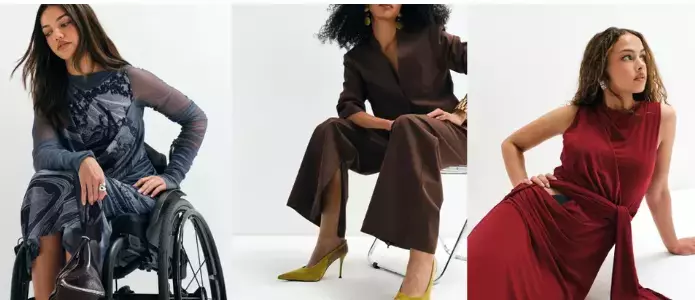
ASOS launched its first dedicated adaptive collection on September 24, 2026, with 51 pieces across womenswear, menswear and curve. The range includes sizes from XS to 3XL and prices from £32 to £65. Developed with disabled customers and accessibility consultancy Tilting the Lens, it brings adaptive features into occasionwear while keeping style, fit and price in view. The launch matters in an industry where disabled customers have long had fewer clothing choices. The collection also offers a practical example of how companies can involve disabled people early, compensate them for their expertise and build accessibility into products rather than treating it as an add-on. Designing for style and function Adaptive fashion has often focused narrowly on function. Ease of dressing, comfort and accessibility are essential, but customers also want clothing that reflects their personality, follows trends and suits special occasions. Disabled people should not have to trade those preferences for garments that meet their access needs. Research conducted by ASOS and Tilting the Lens found that 86% of participants identified comfort and fit as leading factors in their purchasing decisions. The research also highlighted the importance of appearance. Laia Cargol Martinez, Product Design Lead at Tilting the Lens, said participants repeatedly described the difficulty of finding adaptive clothing that combined function with style. “It was surprising how many participants spent countless hours searching mainstream retailers for ‘accidentally adaptive’ items that provided for trends and aesthetics as well as function,” she said. “Accidentally adaptive” describes clothing that was not designed with a person’s needs in mind but happens to work for them. Someone might search for a dress with room for a stoma bag, a jacket that sits comfortably while seated or a fastening they can manage independently. Finding those items can mean testing different cuts, fabrics and designs through trial and error. That work takes time and limits choice to what a customer can make work, rather than what they would most like to wear. Occasionwear with practical details ASOS chose occasionwear partly because it addresses a clear need and is already one of the retailer’s strengths. Clothing for weddings, graduations, job interviews, celebrations and first dates can be especially significant: people want to feel confident, comfortable and like themselves. Finding one garment that supports all three can be difficult for disabled customers. The collection includes a graphic-print mesh maxi dress with a concealed pocket beneath the front drape and tube access through the side seams. It also includes tailored garments with contoured waistbands designed to accommodate people who spend extended periods seated. These adaptive details sit within clothing that looks and feels like the rest of ASOS’s fashion offering. Vanessa Spence, EVP Brand & Creative at ASOS, described the ambition as bringing the retailer’s fashion-led approach “to a category where Disabled customers have historically had fewer choices.” Cargol Martinez also acknowledged that participants identified unmet needs in adaptive workwear, activewear, swimwear, footwear and accessories. Occasionwear is a starting point, not a solution to every gap. Co-design from the beginning ASOS worked with Tilting the Lens to involve disabled people throughout development, compensating participants for their time and expertise. The process began before the design team started sketching. In an initial ideation session, participants explored existing ASOS garments, suggested adaptive features and identified the clothing they most wanted to see. After prototypes were developed, participants returned to test them and offer feedback. Garments that needed more substantial changes went through another review. Because participants had helped set priorities at the outset, later sessions could focus on refining details rather than correcting basic assumptions. The feedback shaped practical design decisions. Magnetic fastenings needed to be manageable for people with limited dexterity while remaining secure for everyone. Participants also helped adjust the positioning and dimensions of stoma bag access points. Product information explains that magnets may affect pacemakers or other medical devices, giving customers relevant guidance. Disabled people are often asked to contribute experience and knowledge to research and corporate projects without pay. Compensation recognizes that this is expertise, not simply a personal story. As Sinéad Burke, Founder and CEO of Tilting the Lens, said in the launch announcement, “True inclusion in fashion starts with co-design.” Involving users early can reveal possibilities a design team may not have considered and identify practical problems before they become costly to fix. Price and business relevance ASOS priced the adaptive collection in line with its main range rather than charging a premium for additional design considerations. The company said it had considered extra expenses disabled customers often face, including clothing alterations, and wanted to avoid adding to that financial burden. The issue is significant in the UK. According to disability equality charity Scope, Disabled households need an average of £1,095 more each month to achieve the same standard of living as non-disabled households. Clothing is only one part of those additional costs, but adaptive garments can be more expensive or require costly alterations. Building accessibility into products without adding a separate charge challenges the idea that inclusive design must inevitably cost customers more. Connecting the collection to ASOS’s existing strength in occasionwear may also help make adaptive design part of the retailer’s core business rather than a separate initiative vulnerable to changing budgets or priorities. Disabled customers already spend time searching mainstream retailers for clothing that meets their needs. That search points to demand that businesses can better serve by listening to customers. What comes next The collection’s 51 pieces are a promising start, but research and participant feedback point to needs across everyday clothing, workwear, sportswear, swimwear, footwear and accessories. More choice is also needed in styles, sizes and price points. The longer-term significance of ASOS Adaptive will depend on how it develops, whether it expands into other categories and whether other retailers adopt similar approaches. For businesses beyond fashion, the process offers clear lessons: involve disabled people before a brief is set, pay them for their expertise, connect inclusive products to genuine organizational strengths and consider customers’ preferences as well as access requirements. Spence summarized the design ambition as considering “style and adaptive functionality together from the outset.” That straightforward principle can inform product development, recruitment, technology and public services.

 5 Underestimated Influences That Can Affect Hiring Decisions
 AI Fluency: The Essential Skill for Work and Growth
 3 Types of Reading and When to Use Each One
 Employee Tardiness May Point to a Leadership Problem
 Questions to Ask Before Hiring a Tech Recruiter
 What Questions Should You Ask a Life Sciences Staffing Agency?