Article
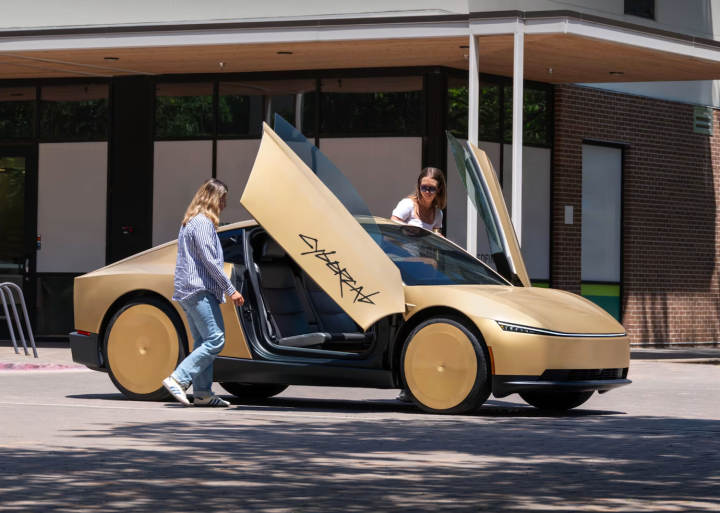
Tesla’s Cybercab rollout plans Tesla plans to take its Cybercab service beyond Austin, beginning with an expansion to Dallas next month and adding other cities by the end of this year. The company also intends to start selling Cybercabs to fleet operators by year-end, a move that could help extend the service beyond vehicles Tesla operates itself. ...
Read article
Tesla’s Cybercab rollout plans Tesla plans to take its Cybercab service beyond Austin, beginning with an expansion to Dallas next month and adding other cities by the end of this year. The company also intends to start selling Cybercabs to fleet operators by year-end, a move that could help extend the service beyond vehicles Tesla operates itself. Tesla already runs small fleets of robotaxi versions of its Model Y SUV in Dallas, Houston, Miami, Orlando and Tampa. The planned Cybercab rollout would therefore build on a presence in several of the markets where the company has already introduced robotaxi service, while bringing a different vehicle into its expansion plans. Chief Financial Officer Vaibhav Taneja said Tesla wants to scale the Cybercab, and reported that the manufacturing team views it as one of the company’s easiest products to build at scale. Still, the company has not specified how many vehicles it expects to deploy in each city. Tesla’s stated timeline points to expansion within weeks in Dallas, broader city additions before the year closes, and sales to fleet operators on a similar schedule. Competition and the robotaxi business Tesla is pitching the Cybercab as a lower-cost alternative in a market where Waymo is already the U.S. robotaxi leader. The company says the vehicle should be cheaper and easier to build than rivals’ robotaxis, potentially letting Tesla undercut Waymo and other operators on price. But that cost argument remains unproven: Tesla needs to expand beyond Austin and reach real scale to show it can deliver. The scale gap is substantial. Waymo has more than 4,000 robotaxis operating in over a dozen U.S. cities, while Tesla’s Cybercab rollout is only beginning. Tesla has not disclosed how much revenue its overall robotaxi effort is bringing in, and it did not provide figures for paid robotaxi miles. Its latest shareholder letter switched from tracking cumulative paid miles to cumulative unsupervised miles, which count driving whether or not a car has paying riders. Asked about paid miles, CFO Vaibhav Taneja said utilization was improving but offered no specifics. Tesla CEO Elon Musk said the ride-hailing business may not be noticeable in the company’s overall financial results until the second quarter of 2027, and could become a big factor by the third or fourth quarter. Until Tesla reports clearer commercial measures and expands at scale, its cost claims will be difficult to assess against Waymo’s established footprint. Manufacturing, approvals and safety rules Tesla’s manufacturing team sees the Cybercab as an easy vehicle to build quickly, according to CFO Vaibhav Taneja. “Scaling would not be that much of a challenge,” he said on the company’s third-quarter earnings call. The more uncertain part, he cautioned, is getting the regulatory approvals needed to deploy vehicles as quickly as they can be produced. That concern has already become concrete. In September, hours after Tesla formally launched the Cybercab in Austin, the National Highway Traffic Safety Administration opened an investigation into whether the vehicle complies with current federal motor vehicle safety standards. Automakers self-certify compliance, and Tesla has said the Cybercab meets the standards. But the vehicle lacks features those rules currently require, including a brake pedal and side mirrors. The NHTSA has proposed removing some of those requirements, but a change is likely still at least a few months away. Until then, the gap between Tesla’s claimed compliance and the features specified in current rules could complicate deployment. Taneja’s comments underscore the challenge: production capacity may be ready to grow, but manufacturing ease alone cannot ensure the Cybercab can enter new markets on Tesla’s preferred timetable. Regulatory clearance remains a potential brake on the rollout. Technology limits on service expansion Autonomy chief Ashok Elluswamy said the remaining bottlenecks to a wider robotaxi rollout are not purely regulatory; they are also driven by technology. Tesla has gradually extended service hours as its AI software has gained capability. The robotaxi service initially ran from 6 a.m. to 9 p.m., then expanded to 10 p.m. to 11 p.m. The company expects to extend availability to 2 a.m. soon. Hours are not the only limit. Tesla’s service still does not operate on highways or in certain conditions, although its cars have been spotted driving in heavy rain in Austin. Elluswamy said Tesla plans to address more of these challenging driving scenarios by the end of the year, before scaling further. That cautious approach reflects the company’s stated priority of avoiding safety incidents. “We just want to make sure that there’s not a single safety incident,” Elluswamy said, adding that Tesla does not want to take on even the slightest possible risk. The pace of expansion, then, depends not only on where Tesla wants to offer rides, but on what its software can handle safely.

 Canva Craft: Canva’s First Image Generation Model
 OpenAI Widens Access to Its Fast Decisions API Model
 Warp Sciences Raises $215M to Automate Drug Discovery Labs
 Spotify Family Plan QR Verification: Rules and Penalties
 Spotify Wants AI Agents to Make It Your Go-To Music Service
 Helion Gets $175M to Develop Semiconductors for Fusion