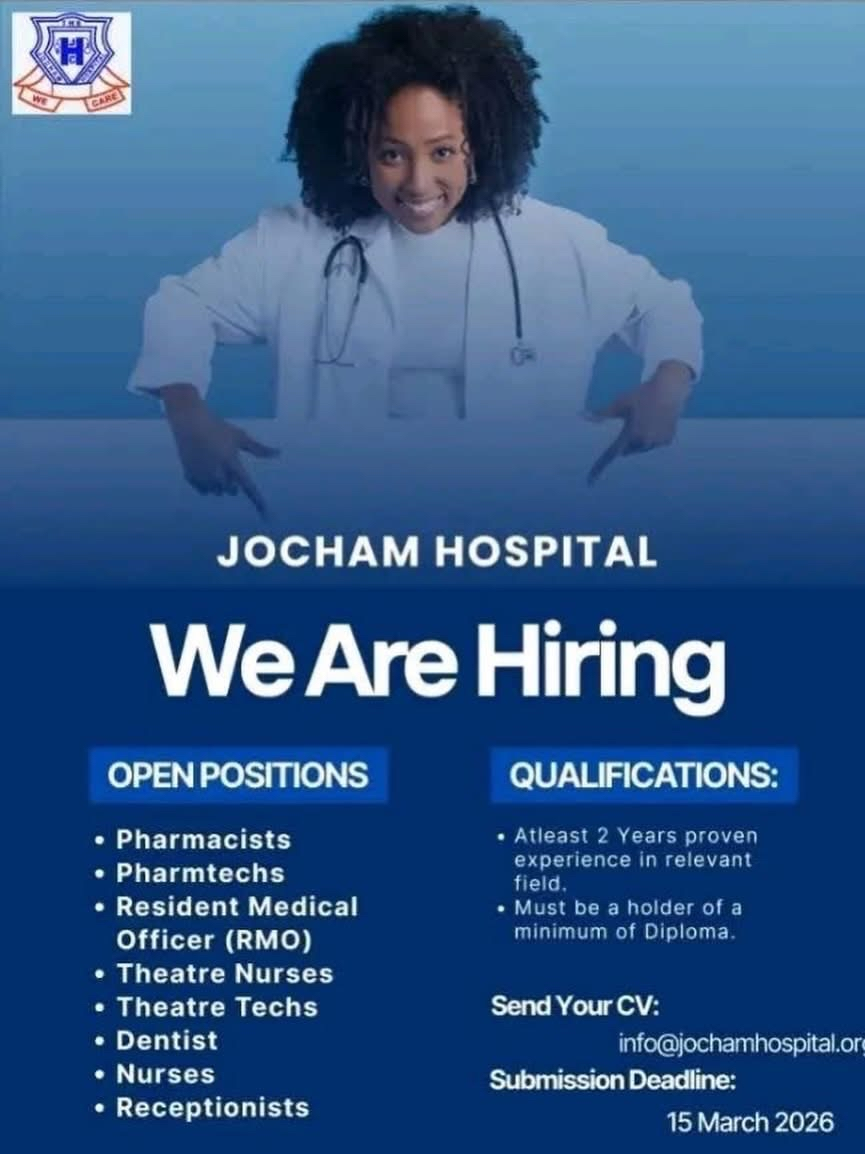
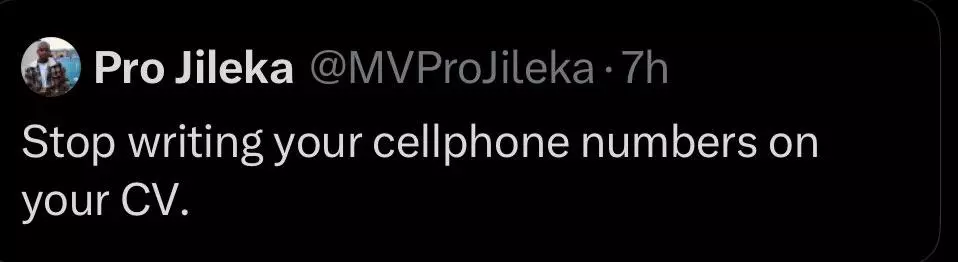
"When a rich man is sick, the poor come to sympathize. When a poor man is sick, he recovers and later goes to tell the rich that he was sick," ~ Chinua Achebe.
You should never send your CV alone without composing a proper email. Here's an example:
To: [Email address of the company you’re applying to]
Subject: APPLICATION FOR THE POSITION OF [POSITION TITLE]
... more𝗛𝗼𝘄 𝘁𝗼 𝗺𝗮𝗶𝗹 𝗖𝗩
When asked to email your CV,
You should never send your CV alone without composing a proper email. Here's an example:
To: [Email address of the company you’re applying to]
Subject: APPLICATION FOR THE POSITION OF [POSITION TITLE]
Email Body:
Dear [Employer/HR Manager],
I am writing to express my interest in the position of [Position Title] as advertised recently. My qualifications, skills, and experience align closely with your requirements for this role.
Please find my CV and supporting documents attached for your review. I would be delighted to discuss how I can contribute to your team and look forward to hearing from you soon about this exciting opportunity.
If you've already decided who's getting the job, please, let's normalize not holding interviews just for the sake of it.
People are out here borrowing money for transport, buying clothes they can't afford, and building up hope they ... moreDear Recruiters,
If you've already decided who's getting the job, please, let's normalize not holding interviews just for the sake of it.
People are out here borrowing money for transport, buying clothes they can't afford, and building up hope they can't afford to lose. It's rough out there.
A little transparency goes a long way. It's not just about the job; it's about respecting people's time, effort, and dignity. less
We understand that when a job advert states “only shortlisted candidates will be contacted” and weeks pass without feedback, it likely means one wasn’t shortlisted. That’s fair.
What’s harder to understand is post-interview sil... moreDear Hiring Managers,
We understand that when a job advert states “only shortlisted candidates will be contacted” and weeks pass without feedback, it likely means one wasn’t shortlisted. That’s fair.
What’s harder to understand is post-interview silence. If a candidate is interviewed and told a decision will be made within a set timeframe, only for weeks to pass with no update, it creates unnecessary uncertainty.
Candidates invest time, preparation, and emotional energy into interviews. Providing closure, even a brief update or rejection, isn’t just courteous, it’s professional.
Clear communication shows respect for people who engage sincerely with your process. Candidates don’t always expect a “yes”, but they do deserve clarity and closure. less
Lately, I’ve noticed a pattern in the hiring space that many job seekers are talking about.
Companies are actively posting job openings across platforms, encouraging candidates to apply, network, and even reach out to hiring teams. But when candidates ac... moreLately, I’ve noticed a pattern in the hiring space that many job seekers are talking about.
Companies are actively posting job openings across platforms, encouraging candidates to apply, network, and even reach out to hiring teams. But when candidates actually do that — sending follow-ups, messages, or emails — there is often complete silence.
No response. No update. Not even a rejection.
As I am working in HR, I understand that recruiters and hiring managers are busy, and the volume of applications can be overwhelming. But a simple acknowledgment or closure message can make a big difference for candidates who invest time, energy, and hope into each application.
Job searching is already mentally exhausting. Clear communication, even if it’s a “no,” shows respect for the effort candidates put into it.
Hiring is a two-way process. Just like companies look for professionalism from candidates, candidates also value transparency and basic communication from employers.
I hope we move toward a hiring culture where communication is not seen as optional, but essential. less