
-
4 minutes, 45 seconds
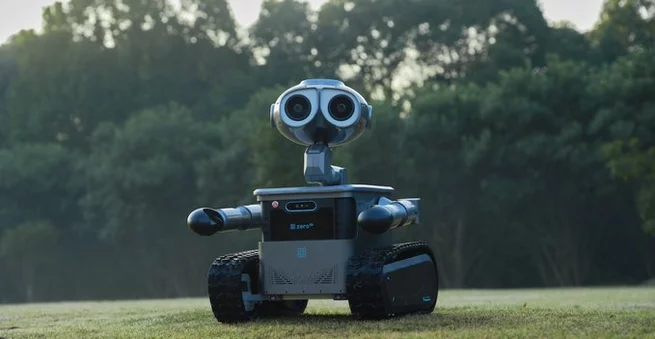
Zeroth W1 robot is turning heads at CES 2026 by answering a question many consumers are already searching for: can you actually buy a real-life WALL-E? Short answer—almost. Robotics startup Zeroth has unveiled the W1, a home robot inspired by Pixar’s iconic character, priced at $5,599 in the US. While the officially licensed WALL-E version remains exclusive to China, the W1 offers a close alternative for curious buyers. It’s designed as a companion-style robot rather than a full household assistant. Zeroth says the focus is mobility, personality, and light utility. The reveal places Zeroth squarely in the growing consumer robotics race.
The Zeroth W1 robot clearly borrows from WALL-E’s silhouette, even if it avoids Disney’s trademark look. Gone are the bright yellow panels and expressive eyes, replaced by a more neutral, off-brand design. What remains is the familiar dual-tread system that gives the robot its charm and terrain flexibility. According to Zeroth, these treads allow the W1 to move across grass, gravel, and mild slopes with ease. The robot stands 22.6 inches tall, making it compact enough for indoor use. Its overall design feels intentionally friendly rather than industrial. That choice signals Zeroth’s aim at everyday consumers, not factories.
Under the hood, the Zeroth W1 robot relies on a mix of lidar, RGB cameras, and environmental sensors to move safely. This setup allows it to map rooms, avoid obstacles, and follow users around the house. Despite its modest size, the W1 can carry up to 110 pounds, more than twice its own weight. Zeroth positions this strength as useful for transporting groceries, boxes, or household items. Navigation is autonomous, though the robot is built for predictable, low-risk environments. The company describes its ideal use cases as “light scenarios,” not heavy labor. That framing keeps expectations realistic for first-time buyers.
When it comes to features, the Zeroth W1 robot keeps things simple but social. It can act as a mobile item carrier, a follow-along companion, and even a casual game host. A built-in 13-megapixel camera lets it take photos, adding a lifestyle angle to its functionality. Zeroth also highlights its ability to interact during family activities or gatherings. However, it’s not designed to replace smart assistants or perform complex chores. Its top speed is just 1.1 miles per hour, emphasizing safety over efficiency. Think of it as a moving helper, not a robot butler.
Availability is where things get interesting for global buyers. The officially licensed WALL-E robot from Zeroth is currently sold only in China. The W1, meanwhile, is the version being marketed to US consumers at CES 2026. At $5,599, it sits firmly in the premium gadget category. That price reflects early-stage consumer robotics rather than mass-market affordability. Still, interest appears strong among tech enthusiasts and collectors. Zeroth seems to be testing whether emotional design can justify the cost.
The launch of the Zeroth W1 robot highlights a broader shift in home technology. Robots are no longer just smart speakers or vacuum cleaners hidden under furniture. Companies are now betting on visible, character-driven machines that share space with people. Zeroth’s approach blends nostalgia, mobility, and light practicality into a single product. While the W1 won’t change how homes operate overnight, it signals where consumer robotics is heading. As CES 2026 shows, the future of tech may look a lot cuter—and a bit slower—than expected.

2.5K articles

1.4K articles

34 articles

28 articles













Comment