Z TriFold vs. Mate XT: Which Trifold Phone Wins?
If you’re wondering whether the Samsung Galaxy Z TriFold or Huawei Mate XT is the better trifold phone, you’re not alone. As the first two devices in this emerging “trifold” category hit global markets, consumers are weighing not just specs—but real-world usability. Both fold twice to reveal expansive screens, but only one delivers true three-in-one versatility. After weeks of testing, one thing’s clear: they’re built for very different users.
A Tale of Two Folds—But Only One True “Z”
Despite its name, Samsung’s Galaxy Z TriFold doesn’t fold in a classic “Z” shape. Instead, it uses a book-style fold plus an external cover screen—a clever but less radical approach. Huawei’s Mate XT, meanwhile, actually folds like a Z: three panels that collapse into a compact phone or stretch into a 10.2-inch tablet. This distinction matters. The Mate XT transforms more dramatically, offering three distinct modes—phone, landscape tablet, and portrait tablet—making it the most adaptable phone I’ve ever used.
Design and Feel: Thin Win for Huawei
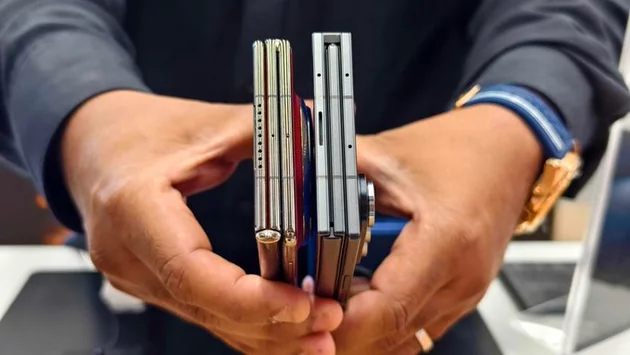
At 12.8mm thick when folded, the Galaxy Z TriFold feels substantial—almost like an early Galaxy Fold. The Huawei Mate XT, by contrast, is a hair thinner at 12.7mm, but its tapered edges and smoother hinge mechanism make it feel slimmer and more refined in hand. Both use premium glass and metal, but Huawei’s craftsmanship edges ahead, especially in how seamlessly the screen creases disappear during use. That said, Samsung’s build quality remains rock-solid, with better dust resistance thanks to its tighter hinge seal.
Display Experience: Bigger Isn’t Always Better
The Mate XT’s 10.2-inch OLED panel is stunning—vibrant, sharp, and perfect for multitasking or watching videos. But Samsung counters with a brighter, more color-accurate main display and adds a handy 5-inch external screen for notifications and quick replies. Huawei only offers a tiny 6.3-inch outer display, which feels limiting when you just want to check a message without unfolding. If you value glanceable info, Samsung wins. If you crave screen real estate, Huawei dominates.
Software and Ecosystem: Samsung’s Secret Weapon
Samsung runs Android with One UI—familiar, polished, and packed with multitasking features tailored for foldables. Huawei, restricted from Google services outside China, uses HarmonyOS with AppGallery. While HarmonyOS is surprisingly smooth and optimized for the trifold form, the app gap is still real for many Western users. Samsung’s ecosystem integration—Galaxy Buds, Watch, DeX—gives it a practical edge for daily productivity, especially for existing Galaxy owners.
Performance and Battery: Close, But Not Equal
Both phones pack flagship-tier chipsets: the Mate XT runs on Huawei’s in-house Kirin 9010, while the Z TriFold uses the Snapdragon 8 Gen 3 for Galaxy. In day-to-day use, they’re equally snappy. Battery life is nearly identical too—both last a full day with moderate use. But Samsung supports faster wired and wireless charging, while Huawei lags slightly in recharge speed despite its larger battery. Neither excels in low-light photography, though Samsung’s camera tuning feels more consistent.
The Verdict: Versatility Has a New Name
Here’s the truth: the Huawei Mate XT is the more innovative device. It redefines what a phone can be, shifting effortlessly between phone, mini-tablet, and full tablet. The Samsung Galaxy Z TriFold, while less radical, offers a more familiar, reliable Android experience with better app support and ecosystem synergy. If you prioritize flexibility above all, go with the Mate XT. But if you want foldable innovation without compromising on daily usability, the Z TriFold is the smarter buy—for now.
As trifold phones move from niche experiments to mainstream contenders, this rivalry will shape the next era of mobile design. One thing’s certain: 2025 is the year your phone finally stopped being just a phone.