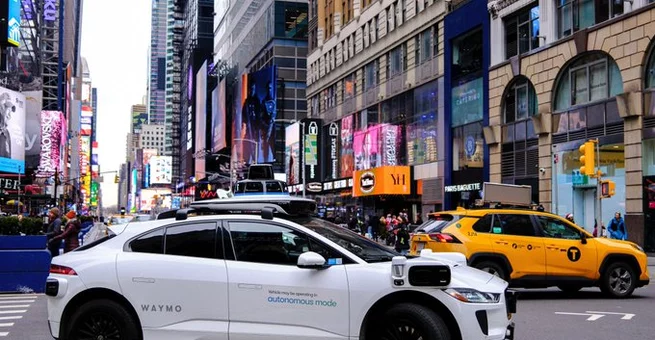
New York Governor Kathy Hochul has officially dropped her proposal to allow robotaxi services to operate commercially in cities beyond New York City. The plan, intended to open the door for autonomous vehicle companies like Waymo, failed to gain traction with state legislators. For companies banking on New York as a launchpad, this decision poses a major obstacle to expansion plans.
While the governor’s initial proposal aimed to grant limited robotaxi deployment in cities across the state, New York City’s adoption was left to the mayor and City Council. Without legislative support, the proposal is effectively dead, leaving companies like Waymo in a holding pattern.
Waymo has long viewed New York as a key market for its autonomous ride-hailing services. The company has been testing manually driven autonomous vehicles under a special permit issued during former Mayor Eric Adams’ administration, but that permit expires on March 31.
Waymo currently operates driverless services in six U.S. cities and had ambitious plans to expand to an additional 20 cities in 2026. The halted legislation now delays potential commercial operations in New York, forcing the company to reassess its timeline.
“While we are disappointed by the Governor’s decision, we remain committed to bringing our service to New York and will continue working with the State Legislature,” Waymo spokesperson Ethan Teicher said.
Waymo’s push for New York expansion has been extensive. Since 2019, the company has reportedly spent over $1.8 million lobbying state lawmakers, the governor’s office, and city officials. The goal has been clear: secure legal pathways for commercial robotaxi operations outside the city limits.
Despite these efforts, the legislative hurdles proved insurmountable. Sean Butler, a spokesperson for Governor Hochul, emphasized that the proposal lacked sufficient support to move forward, reflecting broader skepticism about autonomous vehicle regulations in smaller cities.
This setback highlights the challenges autonomous vehicle companies face in navigating state regulations. While New York City could still permit robotaxis at the discretion of local officials, a statewide framework for commercial operations now seems unlikely in the near term.
For Waymo, this represents both a delay and a reminder of the complex regulatory landscape that comes with pioneering self-driving technology. Other autonomous vehicle companies observing the New York market will also have to adjust their strategies accordingly.
Even with this legislative defeat, the robotaxi industry continues to grow nationwide. Waymo’s plans for expansion remain ambitious, and cities outside New York might still offer fertile ground for pilot programs. However, the decision underscores the importance of aligning with local lawmakers and communities to ensure smooth adoption.
For New Yorkers eager to experience autonomous ride-hailing, patience may be necessary. The promise of robotaxis may still arrive, but the timeline has been pushed further into the future.
Waymo Faces Setback as New York Drops Robotax... 0 0 0 3 2
2 photos





Array