
Alerts
-
4 minutes, 5 seconds
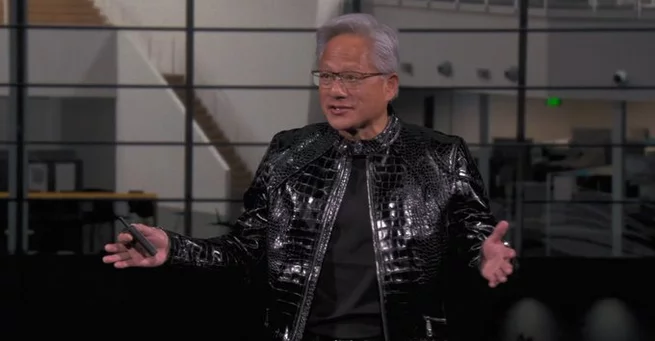
CES 2026 kicked off with Nvidia making waves across AI, gaming, and autonomous driving. Early in the year, the company unveiled its Vera Rubin platform, exciting updates to GeForce Now and G-Sync, and a new push into self-driving car technology. Gamers, developers, and AI enthusiasts are already buzzing about what these announcements mean for performance and innovation. Here’s a breakdown of the most important reveals from Nvidia’s CES showcase so far.
Nvidia surprised audiences by launching the Vera Rubin architecture ahead of schedule. Named after pioneering astronomer Vera Rubin, this platform is designed to accelerate AI model training far more efficiently than the current Blackwell chips. According to Nvidia, Vera Rubin combines six specialized chips—including a Vera CPU, Rubin GPU, NVLink 6th-gen switch, Connect-X9 NIC, BlueField4 DPU, and Spectrum-X 102.4T CPO—into a single, powerful AI system. Dion Harris, senior director of HPC and AI solutions, described it as “six chips that make one AI supercomputer,” highlighting Nvidia’s ambitious leap in AI infrastructure.
Nvidia also expanded its automotive portfolio with new self-driving technology. The company showcased software capable of rivaling Tesla’s Autopilot, aiming to enhance vehicle safety and automation. CES attendees were shown detailed simulations of Nvidia’s autonomous driving systems, emphasizing real-time processing and AI-driven decision-making. This move signals Nvidia’s commitment to dominating not only gaming and AI but also next-generation mobility solutions.
PC gamers received several software updates that promise smoother gameplay and enhanced visual fidelity. Nvidia’s DLSS technology now supports more advanced AI upscaling, improving performance on both older and current GPUs. G-Sync monitors benefit from new adaptive refresh features, minimizing screen tearing and input lag. Meanwhile, GeForce Now cloud gaming received updates that expand compatibility and reduce latency, making high-end gaming more accessible than ever on a variety of devices.
While Nvidia’s consumer GPU announcements may wait until CES 2027, the 2026 showcase impressed with software and AI-focused innovations. Industry insiders note that Vera Rubin’s efficiency and scalability could reshape AI research and cloud computing. Meanwhile, gamers and car manufacturers are watching closely to see how Nvidia’s autonomous and gaming technologies integrate into real-world applications. CES 2026 proved that Nvidia is not just about flashy GPUs—it’s a major player in AI, gaming, and automotive technology.
With Vera Rubin, new autonomous systems, and expanded gaming platforms, Nvidia sets the tone for 2026. Analysts predict further integration of AI across data centers, consumer devices, and automotive tech, positioning the company for a year of high-impact innovations. CES may have just started, but Nvidia’s announcements suggest a future where AI and gaming blend seamlessly with everyday technology.







Comment