
-
8 minutes, 19 seconds
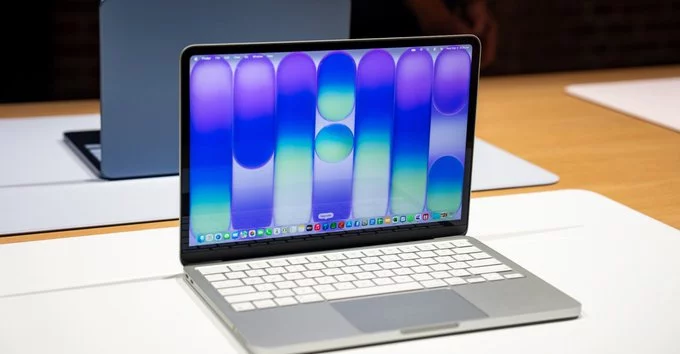
Searching for details about the MacBook Neo price, specs, and whether it’s worth buying? Apple’s new MacBook Neo starts at $599, runs on the A18 Pro chip from the iPhone lineup, and comes in bold, colorful finishes that instantly set it apart. It’s lighter on paper, different in feel, and filled with surprising tradeoffs that could reshape Apple’s entry-level laptop strategy.
Apple is clearly targeting students, first-time Mac buyers, and anyone who wants a modern Mac experience without the premium price tag. But the Neo is not just a cheaper MacBook. It’s a fundamentally different one.
The first thing you notice about the MacBook Neo isn’t performance. It’s color.
Unlike the muted tones of the MacBook Air and MacBook Pro lines, the Neo embraces playful finishes. Options like blush, citrus, and indigo give it a personality that feels closer to the iPhone family than traditional Macs. The citrus version, in particular, grabs attention with a bright, almost chartreuse-like tone.
Apple says the keyboards are color-matched, though the effect is subtle on most variants. Indigo stands out the most. The overall look feels deliberate — a signal that this laptop is designed for a younger, style-conscious audience.
This is Apple experimenting again, reminiscent of the bold iMac era but applied to a budget-friendly portable machine.
Perhaps the biggest headline feature is inside.
Instead of an M-series processor, the MacBook Neo runs on the A18 Pro — the same chip found in Apple’s latest high-end iPhones. That decision dramatically changes the conversation around performance expectations.
On paper, the A18 Pro is powerful and efficient. For everyday tasks like browsing, streaming, note-taking, document editing, and light creative work, it feels responsive and smooth. Apple’s silicon integration ensures strong optimization across macOS.
However, this is not positioned as a professional workstation. Power users accustomed to M-series performance may notice limitations in heavy multitasking, demanding creative workflows, or sustained workloads. This is a Mac built for accessibility and efficiency, not peak horsepower.
Still, Apple’s confidence in bridging iPhone-class silicon with a Mac experience is fascinating. It suggests a future where chip boundaries blur even further.
One of the most unexpected changes comes from the trackpad.
Unlike recent MacBooks with haptic feedback systems, the MacBook Neo features a physical, clickable trackpad. Yes — it actually moves. Even more surprising, it clicks evenly from corner to corner, avoiding the common “bottom-heavy” click issue found on many Windows laptops.
That design decision stands out. Apple has relied heavily on haptic trackpads for years. Bringing back physical movement feels almost nostalgic, yet refined.
The keyboard experience is familiar but comes with a notable omission: it isn’t backlit. That may be a cost-saving measure, but it could matter for students working in low-light environments.
These tradeoffs highlight the Neo’s core identity — thoughtfully reduced, but not carelessly stripped down.
Apple says the MacBook Neo weighs about the same as the latest MacBook Air. But in hand, it feels different.
The Neo has a slightly smaller footprint and feels denser, almost like a compact slab of aluminum. The weight distribution gives it a distinct presence. It doesn’t feel cheap. It feels intentionally compact.
That physical impression matters. Budget laptops often sacrifice build quality, but the Neo maintains Apple’s hallmark aluminum chassis. For $599, that alone may attract buyers comparing it to similarly priced Windows machines.
The Neo doesn’t scream “budget.” It whispers “strategic.”
Buyers will inevitably compare the MacBook Neo to the MacBook Air.
If you need maximum performance, extended multitasking capability, a backlit keyboard, and an M-series processor, the Air remains the safer bet. It’s built for broader productivity and creative tasks.
But if your needs revolve around web apps, cloud tools, school assignments, streaming, and light editing, the Neo could be more than enough. The lower starting price dramatically reduces the barrier to entry into the Mac ecosystem.
For parents buying for students or users upgrading from older Intel-based Macs, the Neo presents a compelling value proposition.
It’s not replacing the Air. It’s expanding Apple’s ladder.
At $599, Apple is entering territory it has largely avoided in recent years.
That price puts the MacBook Neo in direct competition with mid-range Windows laptops and Chromebooks. It also strengthens Apple’s education appeal, where budget and durability matter just as much as performance.
More importantly, this move signals something bigger: Apple is comfortable differentiating its Mac lineup not just by power tiers, but by chip architecture.
The A18 Pro inside a Mac is a bold step. It hints at a future where Apple can flexibly deploy mobile silicon across device categories to hit new price points.
That flexibility could become a powerful competitive advantage.
MacBook Neo is not just a cheaper Mac. It’s a carefully calibrated experiment.
You gain vibrant colors, solid build quality, efficient A18 Pro performance, and a surprisingly satisfying physical trackpad. You give up an M-series chip, a backlit keyboard, and potentially some heavy-duty computing power.
For the right buyer, those tradeoffs make perfect sense.
Apple didn’t just cut costs — it redesigned expectations. And at $599, the MacBook Neo could become one of the most disruptive entry-level laptops in years.
The real test will come with long-term performance and real-world usage. But one thing is already clear: Apple’s most affordable Mac in years is also one of its most intriguing.

2.6K articles

1.4K articles

34 articles

28 articles














Comment