LG UltraGear evo gaming monitors are LG’s latest answer to a question many gamers are now asking: how much smarter can a display get? Announced ahead of CES 2026, the new UltraGear evo lineup introduces 5K-class resolutions paired with built-in AI upscaling. The monitors target competitive players, creators, and enthusiasts looking for sharper visuals without sacrificing speed. AI processing, once reserved for GPUs and TVs, is now being pushed directly into gaming monitors. LG says this approach improves clarity in lower-resolution content while maintaining smooth performance. The move also reflects a wider industry shift toward AI-enhanced hardware across the PC ecosystem.
LG UltraGear evo lineup focuses on 5K and speed
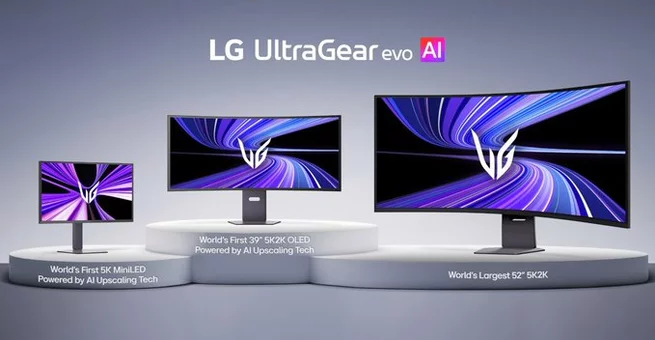
The new UltraGear evo family includes three flagship models designed to cover different gaming styles and setups. LG confirmed that every model in the series delivers a 5K-level resolution, setting a high bar for image detail. While naming conventions like 39GX950B or 27GM950B may confuse buyers, the first number clearly indicates screen size. Each monitor combines premium panel technology with refresh rates aimed at esports and high-end PC gaming. LG is positioning this lineup as a no-compromise offering rather than a niche experiment. The company plans to showcase the full range on the CES show floor next month.
39GX950B targets competitive ultrawide gamers
The 39-inch UltraGear evo 39GX950B is built around a 21:9 ultrawide OLED panel with a 5K2K resolution. At native resolution, it runs at a smooth 165Hz, ideal for cinematic single-player titles and immersive simulators. For competitive gaming, the monitor can switch modes and hit 330Hz at a lower WFHD resolution. This dual-mode approach allows players to prioritize speed or detail depending on the game. OLED technology ensures deep blacks and fast pixel response times. LG is clearly aiming this model at players who want versatility without switching displays.
27GM950B highlights MiniLED and pro-grade brightness
The 27-inch UltraGear evo 27GM950B may be the most intriguing model in the lineup. Instead of OLED, it uses LG’s new MiniLED technology, promising higher brightness and reduced blooming. This approach appeals to gamers who prefer vivid HDR highlights without OLED’s potential burn-in concerns. Industry chatter suggests this panel tech is closely related to displays LG supplies for professional monitors like Apple’s Pro Display XDR. That connection adds credibility to LG’s claims about color accuracy and contrast control. For creators who also game, this model could strike a rare balance between performance and precision.
52G930B pushes size and immersion to extremes
At 52 inches, the UltraGear evo 52G930B is more display wall than desktop monitor. The massive curved screen delivers a 12:9 panoramic view at a native 5K2K resolution. Despite its size, LG says it can still hit a 240Hz refresh rate, targeting high-end gaming rigs. This model is clearly designed for immersive setups, racing sims, and cinematic PC gaming. The curve helps keep the entire screen within the viewer’s field of vision. It also blurs the line between gaming monitor and living-room display.
AI upscaling signals LG’s future display strategy
Across the UltraGear evo gaming monitors, AI upscaling is the unifying feature. LG hasn’t detailed exactly how its AI processing works, but the goal is clearer visuals from non-native resolutions. This could be especially useful as games struggle to balance performance and fidelity at higher resolutions. By offloading some image enhancement to the monitor, LG hopes to reduce strain on GPUs. Pricing and release dates remain unannounced, but expectations are high. With CES approaching, LG’s AI-powered UltraGear evo monitors are shaping up to be one of the show’s most talked-about gaming reveals.






Comment