
-
7 minutes, 40 seconds
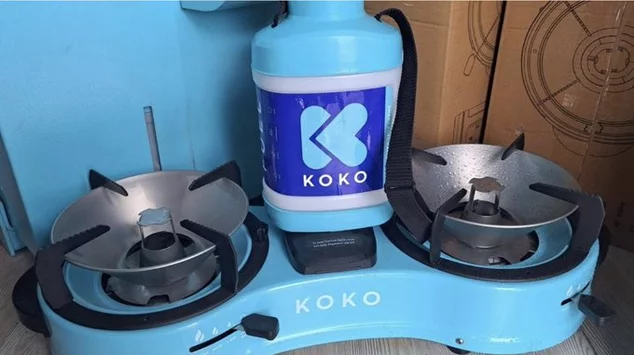
Koko Networks has entered administration after failing to secure carbon approval from Kenyan authorities, putting $300 million in investment and 700 jobs at risk. The clean-cooking startup’s revenue model depended on exporting carbon credits under Article 6 of the Paris Agreement. Without a required Letter of Approval, its carbon income stalled—triggering insolvency. Now, administrators from PricewaterhouseCoopers are racing to sell the business or its assets before a February 26 deadline.
For many Kenyans, the sudden move raises urgent questions: What happens to Koko fuel stations? Are employees protected? And what does this mean for Kenya’s carbon market ambitions? Here’s what we know.
Koko Networks was not a typical fuel retailer. Its model blended clean energy distribution with carbon finance. By replacing charcoal with ethanol-based cooking fuel, the company generated carbon credits intended for sale in international compliance markets under Article 6 of the United Nations–backed Paris Agreement framework.
The missing piece was a government-issued Letter of Approval. That document would have authorized Koko to export its carbon credits into regulated markets. Without it, expected foreign revenue flows never materialized. Once carbon income stalled, cash flow pressure intensified, suppliers tightened terms, and creditors began circling.
The collapse did not stem from weak demand for clean fuel. Instead, it exposed how deeply the company’s financial stability depended on carbon policy execution.
Administrators from PricewaterhouseCoopers have formally invited Expressions of Interest for the sale of Koko Networks as a going concern or through selected asset disposals. The sale includes an extensive portfolio that reads like a mini-utility infrastructure blueprint.
Assets reportedly include:
Smart fuel-dispensing machines across retail locations
Tanker and depot systems
Delivery trucks and motorbikes
Software platforms and proprietary systems
Intellectual property
Office equipment and operational tools
This is not just a startup liquidation. It is the potential transfer of a nationwide clean-cooking network built over years of capital-intensive investment.
PwC has indicated that significant additional capital would be required to stabilize operations and resolve insolvency issues. Buyers will need both liquidity and confidence in Kenya’s carbon regulatory framework.
Beyond balance sheets, Koko Networks employed approximately 700 people and built an ecosystem that supported retailers, logistics operators, and fuel distributors. For employees and partners, administration introduces uncertainty about wages, contracts, and continuity.
The broader concern lies in Kenya’s clean energy narrative. Koko positioned itself as a climate-tech success story—blending technology, infrastructure, and environmental markets. Its collapse could send caution signals to investors evaluating carbon-linked ventures in emerging markets.
Private capital typically follows regulatory clarity. When approval mechanisms delay or stall, funding models built on carbon pricing assumptions become vulnerable. Investors are now watching closely to see how authorities respond and whether reforms accelerate.
Article 6 of the Paris Agreement enables countries to trade emissions reductions in global compliance markets. For climate startups, this mechanism unlocks monetization pathways that extend beyond voluntary carbon offsets.
However, participation requires host-country authorization. Without formal approval, credits cannot legally flow into compliance systems. For Koko Networks, that approval was essential to unlocking expected revenue streams tied to carbon markets.
The situation highlights a structural tension: innovative climate businesses often move faster than regulatory systems. When administrative timelines slip, commercial consequences can be immediate.
Kenya has positioned itself as a regional climate leader. Yet this case suggests that carbon market governance remains a work in progress—particularly for large-scale commercial deployments.
The February 26 submission deadline now looms large. Potential buyers must evaluate not only physical assets but also regulatory risk, carbon pricing volatility, and operational turnaround costs.
Creditors are waiting for clarity on recoveries. Employees are hoping for a going-concern sale rather than piecemeal liquidation. The administration process will determine whether Koko’s network continues operating or fragments into separate asset sales.
Market observers say the outcome could shape investor sentiment toward future carbon-backed ventures in East Africa. A successful acquisition might restore confidence. A distressed breakup could trigger caution across climate-finance circles.
Koko Networks’ collapse raises deeper questions than one company’s insolvency. It tests whether Kenya’s carbon approval architecture can reliably support private-sector bets tied to global compliance pricing.
Carbon markets promise new revenue streams for climate action. Yet credibility depends on timely authorization, transparent governance, and predictable processes. Delays can undermine otherwise viable business models.
For policymakers, the lesson may be clear: carbon innovation requires regulatory synchronization. For investors, due diligence must now extend beyond technology and demand into sovereign administrative timelines.
For households relying on clean cooking solutions, continuity of supply will matter more than carbon accounting debates.
Koko Networks invested $300 million into Kenya’s clean-cooking infrastructure. That capital built depots, logistics systems, smart dispensing machines, and digital platforms. Whether those assets find new ownership will determine if the story ends as a cautionary tale—or a restructuring success.
Climate-tech ventures across Africa often operate at the intersection of policy and private finance. When one pillar shifts, stability falters. The next few weeks will reveal whether Kenya’s clean energy ecosystem can adapt quickly enough to preserve value.
For now, the market waits. The assets are on the table. The clock is ticking.

2.5K articles

1.4K articles

34 articles

28 articles














Comment