Humanoid robots took center stage at CES 2026, promising to finally bring science fiction into everyday homes. Many readers want to know whether these machines can actually handle real chores or if they’re still limited to flashy demos. The short answer: progress is real, but practical home readiness remains uneven. Companies showcased robots claiming to cook, clean, and manage appliances, yet laundry emerged as the ultimate test. Washing clothes involves judgment, flexibility, and precision that still challenge artificial intelligence. CES offered a rare chance to see whether humanoid robots could move beyond marketing claims. The results were impressive in theory but mixed in practice.
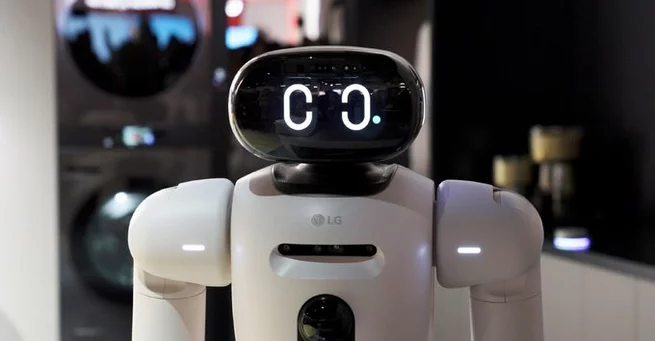
Several major players arrived with bold announcements and confident demonstrations. LG unveiled CLOiD, a humanoid designed to assist with food prep, appliance use, and household organization. SwitchBot introduced the Onero H1, positioning it as an all-purpose home assistant capable of daily tasks. Boston Dynamics, WIRobotics, Zeroth, and others showcased robots with improved balance, vision, and object handling. On the show floor, these machines looked more humanlike than ever. Smooth movements and conversational interfaces suggested rapid progress. Still, real homes demand more than controlled environments.
Robotics and AI advancements over the past few years have clearly raised expectations. Modern humanoid robots now combine computer vision, machine learning, and dexterous hands to interact with everyday objects. Many already excel at repetitive, structured tasks like vacuuming or lawn mowing. Laundry, however, represents a different level of complexity. Clothes vary in size, fabric, and condition, requiring nuanced handling. Robots must recognize garments, avoid tangling, and adapt to unpredictable situations. CES highlighted how far robotics has come—and how far it still needs to go.
Laundry stood out because it’s a chore people genuinely want to outsource. The process involves collecting clothes, sorting colors, loading machines, transferring loads, folding, and carrying stacks to storage. At CES, nearly every robotics company claimed its humanoid could manage at least part of this workflow. Demos showed robots loading washers, opening doors, and folding shirts on flat surfaces. These moments drew crowds and applause. Yet most demonstrations relied on ideal setups and carefully staged conditions. Real-world messiness remains the biggest obstacle.
Observers noted that while robots performed well in isolation, full autonomy is still limited. Many systems required pre-arranged clothing, clear paths, and human supervision. Folding worked best with stiff or neatly laid garments, not crumpled laundry baskets. Picking socks from the floor or untangling damp clothes proved far more difficult. Engineers acknowledged that edge cases remain a major challenge. Despite the hype, most humanoid robots are not yet ready to replace humans in laundry rooms. CES made that gap visible.
Still, the direction is unmistakable. Humanoid robots at CES 2026 demonstrated meaningful progress toward practical home use. What once felt like distant ambition now looks like an achievable engineering problem. While laundry mastery may still be years away, the improvements in perception, grip, and decision-making are accelerating. For consumers, this signals a future where robots gradually take on more complex chores. CES didn’t deliver a laundry-folding breakthrough—but it showed that the era of capable home humanoids is closer than ever.





Comment