Samsung Display’s Crease-Free OLED Sparks Folding iPhone Buzz
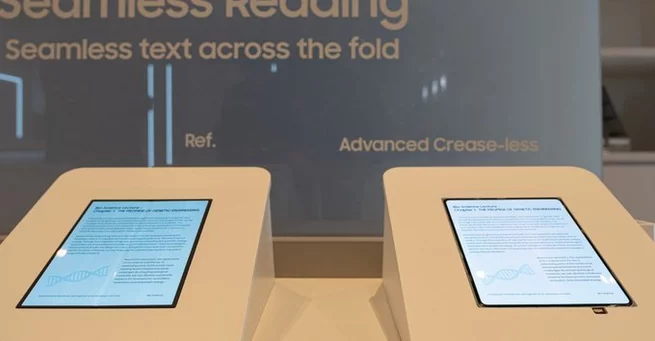
Folding iPhone rumors are heating up after Samsung Display quietly showcased a crease-free foldable OLED panel at CES 2026. The prototype answers one of the most common questions consumers ask about foldable phones: can the screen fold without leaving an ugly crease? According to early reports, the answer may finally be yes. Samsung Display is Apple’s long-time screen supplier, which immediately puts this technology on the radar for a future folding iPhone. The panel was reportedly shown briefly before being removed from public view. Even so, firsthand impressions suggest a major leap forward. If commercialized, this display could solve a problem that has plagued foldables since day one. That possibility alone is enough to reshape expectations around Apple’s foldable plans.
How the New Samsung Display Panel Differs From Today’s Foldables
Current foldable phones, including Samsung’s own Galaxy Z Fold lineup, all show a visible crease along the center fold. The new OLED concept panel, however, appears smooth even when viewed up close. Reports from CES attendees say the display was originally positioned next to a Galaxy Z Fold 7 for direct comparison. That side-by-side demo reportedly made the difference impossible to miss. Unlike existing panels, light reflections did not reveal a dip or line at the fold. This suggests improvements not just in glass materials, but also in hinge engineering. Reducing stress at the folding point has long been the biggest challenge. Samsung Display seems closer than ever to cracking it.
Why Apple Is Closely Linked to This Foldable Breakthrough
Apple does not manufacture its own displays, and Samsung Display has been one of its most trusted partners for years. The company supplies OLED panels for iPhones, iPads, and Apple Watches. Because of that relationship, any major Samsung Display innovation quickly fuels Folding iPhone speculation. Industry watchers believe Apple has delayed entering the foldable market until key hardware compromises are resolved. Screen creases are high on that list, especially for a brand obsessed with visual perfection. A crease-free OLED could remove one of Apple’s biggest objections. While Apple has said nothing publicly, supply-chain signals often tell the story first. This panel fits neatly into that pattern.
CES 2026 Demo Raises Questions About Commercial Timing
Despite the excitement, Samsung Display has been careful to manage expectations. A company spokesperson described the panel as an R&D concept with no fixed commercialization timeline. That wording suggests the technology is not locked into a shipping product yet. The demo unit was also reportedly removed from the booth, adding to the mystery. This could mean the panel is still fragile or simply not ready for mass production. Foldable displays must survive hundreds of thousands of folds without degrading. Scaling a lab breakthrough into millions of consumer devices takes time. Still, public demos rarely happen without confidence in future viability. The timing may be closer than Samsung is willing to admit.
What a Crease-Free Screen Could Mean for the Foldable Market
If Samsung Display brings this technology to market, the impact would extend far beyond a Folding iPhone. Crease-free screens would instantly raise consumer expectations for all foldables. Samsung’s own Galaxy Fold devices would likely adopt the panel first. Competing brands would be forced to respond or risk looking outdated. For Apple, the technology could mark the green light moment to finally enter the category. A folding iPhone without visible compromises would redefine premium foldables. It would also validate years of waiting while rivals rushed early designs to market. Whether Apple is first or last, the race is clearly entering a new phase.





Comment