
-
5 minutes, 6 seconds
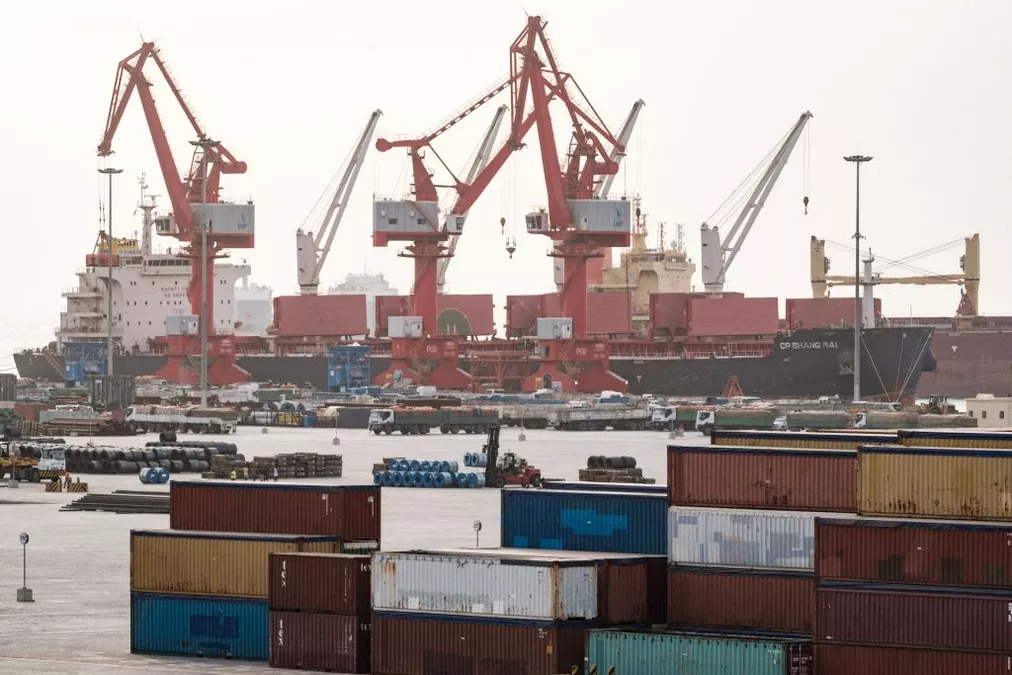
China is rapidly increasing its presence in African ports, sparking questions about the balance between trade development and potential military use. Investors and analysts are closely watching how Beijing’s involvement in port construction, financing, and operations could reshape the continent’s trade routes—and its strategic landscape.
Over one-third of African ports currently see Chinese participation, with Beijing either funding, building, or controlling operations in roughly 78 major trade ports. From Djibouti to Seychelles, Chinese companies are embedding themselves deep into the infrastructure that drives Africa’s international commerce.
China’s port projects are a key component of the Belt and Road Initiative (BRI), aiming to secure global trade routes while strengthening diplomatic and economic influence. Ports are more than commercial hubs; they are strategic choke points where goods flow in and out of Africa.
According to Irina Tsukerman, president of Scarab Rising Inc., “Most African exports and imports still move by sea, and the fastest way to shape that flow is to shape the ports where cargo is cleared, stored, priced, and routed onward.” This dual-purpose design makes Chinese-backed ports vital to both commerce and strategy.
Analysts warn that many Chinese-funded ports have capabilities that could support naval operations, even if built under the guise of commercial trade. Paul Nantulya, research associate at the Africa Center for Strategic Studies, notes that ports in Angola, Namibia, and Seychelles can berth modern Chinese warships, including guided missile destroyers and corvettes.
Kenya’s Mombasa port, for example, features a 245-meter military-grade dock that satellite imagery confirms could host multiple Chinese surface combat vessels. These designs suggest that while ports operate commercially, their infrastructure could support military activities if required.
The dual-use nature of these ports aligns with China’s 2019 defense strategy, which emphasizes developing “overseas logistical facilities” to support far-seas naval operations. By constructing commercial ports that can pivot to military use, Beijing positions itself to protect shipping lanes, secure trade interests, and project naval power without triggering immediate international scrutiny.
A 2024 report by the United Kingdom’s Royal United Services Institute highlights this approach: “Chinese-funded ports are built to accommodate commercial trade but can—with significant risks and complications—be flipped to military use.” This deliberate ambiguity allows China to expand influence under the appearance of infrastructure investment.
Djibouti’s Doraleh Port sits mere minutes from China’s first overseas military base, showing clear integration between commercial and strategic interests.
Angola’s Luwanda Port can host any major Chinese surface combat vessel.
Namibia’s Walvis Bay accommodates up to eight Chinese guided missile destroyers.
Seychelles’ Victoria Port is capable of docking two modern corvettes.
These ports demonstrate a pattern of investment that blends trade facilitation with potential military application, a trend that has analysts globally questioning Beijing’s long-term goals in Africa.
China’s growing footprint in Africa’s port infrastructure signals a shift in global maritime dynamics. While trade and investment bring tangible benefits to local economies, the potential for military adaptation adds a layer of strategic complexity. Policymakers and regional observers must weigh economic gains against long-term security risks, as ports become both engines of commerce and potential instruments of geopolitical leverage.
As Beijing continues to invest across the continent, African nations may find themselves at the crossroads of economic opportunity and strategic influence, navigating a delicate balance between development and security.

2.6K articles

1.4K articles

34 articles

28 articles














Comment