AI Retail Revolution: How Shopping Will Never Be the Same
Shoppers today are witnessing a shift that will transform every trip to a store. From AI-powered holograms greeting customers to predictive algorithms guiding product recommendations, retailers are betting big on artificial intelligence to reshape the way people browse, buy, and interact with brands. But how much of this AI-driven future will shoppers actually enjoy, and how much will feel imposed?
At this year’s National Retail Federation (NRF) Expo in New York City, the trend was clear: AI is no longer a concept—it’s becoming the backbone of retail experiences, whether consumers like it or not.
Holographic Hosts: The New Store Greeters
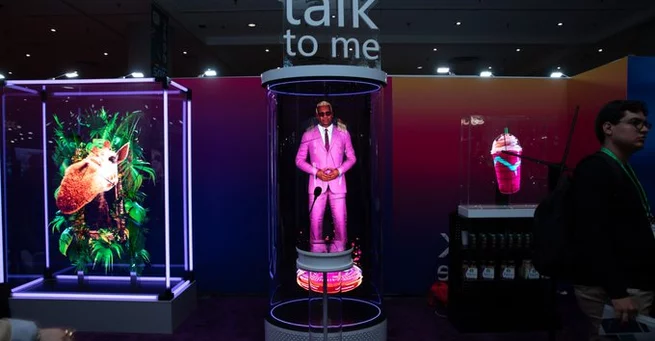
One of the most striking innovations on display was “Mike,” a bleach-blond hologram in a bright pink suit, powered by ChatGPT. Suspended in a clear tube with a microphone, Mike answers audience questions with a slight delay, designed more as an icebreaker than a conversational partner.
Retailers see holograms like Mike as a way to attract attention and create memorable brand interactions. While the technology may thrill tech enthusiasts, its purpose is clear: encourage shoppers to engage, linger, and ultimately buy. Companies like Hypervsn, behind Mike, are positioning holographic assistants as a staple in the future shopping landscape.
AI Everywhere: From Recommendations to Reviews
Beyond flashy holograms, AI is quietly revolutionizing online and in-store shopping. Algorithms now analyze browsing patterns, past purchases, and product reviews to predict what shoppers might want next. Personalized recommendations, targeted promotions, and even AI-generated reviews are increasingly influencing buying decisions.
Retail giants are investing heavily in AI-driven analytics to streamline customer experiences. The goal is simple: make shopping faster, smarter, and more tailored to each individual. For consumers, this means fewer hours spent scrolling and more precise suggestions, though it also raises questions about privacy and over-reliance on automated systems.
The Consumer Dilemma: Excitement or Overload?
While AI innovations promise convenience, some shoppers may feel overwhelmed. Endless recommendations, in-store holograms, and automated assistants risk creating sensory overload or an unnervingly “scripted” shopping experience.
Experts suggest that balance is key. Successful AI integration in retail should enhance—not replace—human interaction. Store employees and AI systems need to complement each other, guiding consumers while still leaving room for spontaneous discovery.
AI’s Role in Future Retail: What’s Next
Looking ahead, AI will increasingly blur the lines between digital and physical retail. Smart mirrors, virtual fitting rooms, and voice-activated assistants are just the beginning. Retailers are exploring predictive stocking, automated checkout, and immersive AR experiences to make shopping more efficient and engaging.
Yet, the real challenge will be adoption. Consumers may not immediately embrace AI-driven interactions, especially if they feel forced or impersonal. Retailers will need to balance novelty with familiarity, ensuring that AI enhances the shopping experience rather than replacing the human touch.
Shopping in the AI Era
The AI retail revolution is already underway, reshaping how we browse, shop, and interact with brands. From holographic hosts to predictive algorithms, artificial intelligence is embedding itself into every step of the customer journey.
For consumers, the future promises convenience, personalization, and engagement—but also new questions about choice, privacy, and authenticity. The retailers that succeed in 2026 and beyond will be those who use AI thoughtfully, creating experiences that delight shoppers rather than overwhelm them.





Array