
Alerts
-
4 minutes, 29 seconds
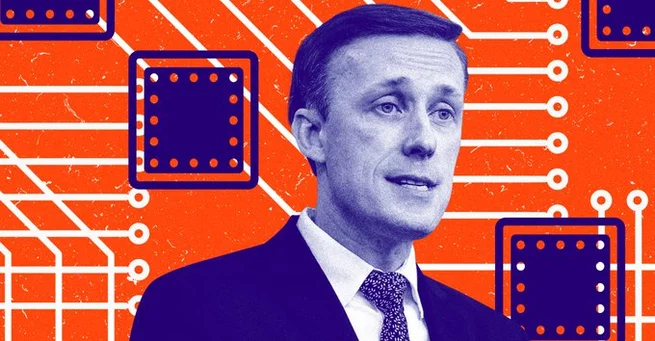
Jake Sullivan, former National Security Adviser under President Biden, is raising red flags over America’s AI strategy. After years of restricting advanced chip exports to China to maintain U.S. technological superiority, Trump’s administration has reversed these controls. Sullivan warns that allowing Nvidia to sell high-end H200 chips to China risks handing over critical AI capabilities to a strategic competitor. The move, intended to boost short-term industry profits, could undermine U.S. national security and long-term innovation.
During Biden’s administration, Sullivan led simulations anticipating a potential AI arms race with China. His team studied outcomes ranging from trade conflicts to advanced AI deployment scenarios. The key policy—restricting high-end chips for AI training—was designed to protect the U.S. from ceding its AI advantage. While tech companies initially resisted, the strategy ultimately strengthened U.S. firms without stalling innovation, proving that export controls can coexist with commercial growth.
Nvidia CEO Jensen Huang successfully persuaded Trump to relax restrictions, allowing H200 chip sales to China while the U.S. takes a 25% cut. Sullivan argues this move fills China’s compute gap, letting companies like Tencent and Alibaba expand globally with American technology. While profitable for corporations, Sullivan warns this short-term gain could empower China as a future AI superpower. Lessons from Tesla’s experience in China, he says, underscore the long-term risks of prioritizing immediate profits over national strategy.
Sullivan highlights another worry: the private sector’s growing sway in shaping U.S. AI policy. By pushing for deregulation and minimal government oversight, tech companies risk ceding control over global standards to China. Export control rollbacks, reduced research funding, and barriers for foreign AI talent could collectively erode America’s innovation edge. Sullivan stresses that government oversight, combined with private innovation, is essential to sustain long-term competitiveness.
While Sullivan acknowledges Trump’s administration has elevated AI’s strategic importance, he criticizes the abandonment of safety and regulatory priorities. Allowing China to dominate AI standard-setting could marginalize the U.S. on the global stage. He warns that short-sighted trade policies may weaken U.S. influence in emerging AI governance, even as American companies pursue profit-driven goals.
Sullivan also critiques proposals linking AI expansion to fossil fuel extraction, such as leveraging Venezuelan oil for data center power. He emphasizes that building resilient energy infrastructure and clean energy solutions, rather than exploiting foreign oil, is the sustainable path forward. Meanwhile, Trump’s policies, he warns, risk misaligning AI growth with strategic, environmentally conscious energy planning.
Ultimately, Sullivan urges U.S. policymakers and tech leaders to balance commercial interests with national security. Selling advanced AI chips to China may offer immediate profits but could compromise America’s global leadership in AI. For Sullivan, safeguarding innovation, supporting basic research, and maintaining oversight are non-negotiable to ensure the U.S. retains its technological edge amid an intensifying AI race.








Comment