
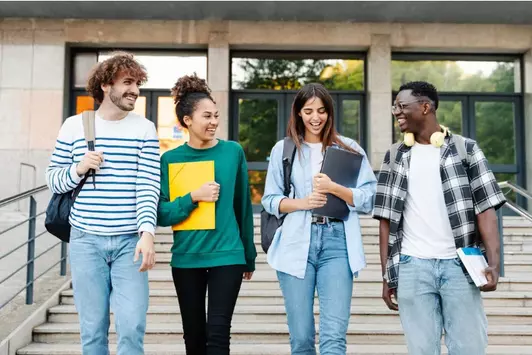
Friends and college student mental health are increasingly linked as campuses face rising loneliness, stress, and burnout. Students, parents, and educators often ask whether friendships really affect academic success and wellbeing. Research now offers a clear answer: they do. More than half of college students report feeling lonely, while stress levels continue to climb across majors and institutions. At the same time, optimism, purpose, and self-esteem are declining. These trends are not just emotional concerns; they directly influence performance, persistence, and dropout risk. Friendship is no longer a “nice to have” in college—it is foundational.
Loneliness and Stress Are Driving Academic Risk
Large-scale studies show that student stress is widespread and consequential. Nearly three-quarters of students report moderate to high stress, and many experience frequent burnout symptoms. As stress increases, so does the likelihood that students consider leaving school altogether. Academic pressure, isolation, and overwhelm often reinforce one another, creating a cycle that is hard to break alone. Without social support, challenges can feel personal rather than situational. This is where friendships play a powerful protective role. They buffer stress before it becomes a crisis.
Friends Improve Academic Performance and Retention
One of the strongest links between friendship and success is academic performance. Students with friends in class tend to earn higher grades and are more likely to persist year to year. Peer relationships encourage collaborative learning, idea sharing, and accountability. Emotional support from friends also reduces anxiety, helping students focus and retain information. Studies show that even modest friendship connections can raise grades and reduce the risk of failing. The effect is especially strong in large classes, where anonymity often increases stress.
How Friendship Reduces Stress and Boosts Focus
Friends do more than help with studying; they regulate stress in daily academic life. When students feel supported, they are better able to concentrate, manage setbacks, and stay motivated. Friends often share notes, clarify confusing material, and provide reassurance after poor performance. This reduces the mental load students carry alone. Over time, lower stress translates into better cognitive performance and decision-making. Friendship, in this way, functions as an informal academic resource.
Friends Increase Engagement, Motivation, and Adjustment
Transitioning to college is one of the most challenging life adjustments students face. High-quality friendships make that transition smoother and less stressful. Research shows that social support increases life satisfaction and motivation, which in turn drives academic engagement. Students with strong peer connections participate more, attend class more consistently, and feel more invested in their education. These effects are especially strong for students living on campus, where proximity fuels connection. Engagement grows where belonging exists.
Friendships Protect Mental Health and Build Resilience
Mental health challenges often intensify during college, but friendship offers meaningful protection. Social support is linked to lower stress, improved emotional wellbeing, and healthier behaviors. It also strengthens resilience, self-esteem, and overall life satisfaction. Students who feel connected are better equipped to cope with setbacks and uncertainty. Friendship provides perspective, reminding students they are not alone in their struggles. That sense of shared experience can be stabilizing during high-pressure periods.
Diverse Friendships Expand Perspective and Success
Friendship benefits extend beyond comfort and support. Students who build relationships across different backgrounds and worldviews often experience stronger academic outcomes. Exposure to diverse perspectives encourages critical thinking and adaptability. These “interworldview” friendships challenge assumptions and broaden understanding. Research shows that students with more diverse social networks are more likely to persist and succeed academically. College friendships, in this sense, shape both intellectual growth and personal development.
Why Building Friendships Should Be a Campus Priority
The evidence is clear: friends are critical to college student mental health and success. Proximity, presence, and repeated interaction are the strongest drivers of friendship. Students benefit from actively reaching out through shared activities, study groups, and campus involvement. Parents can encourage engagement rather than isolation, especially during the first year. Educators and institutions play a role by creating spaces for interaction and collaboration. When friendship is supported, students don’t just survive college—they thrive.
𝗦𝗲𝗺𝗮𝘀𝗼𝗰𝗶𝗮𝗹 𝗶𝘀 𝘄𝗵𝗲𝗿𝗲 𝗽𝗲𝗼𝗽𝗹𝗲 𝗰𝗼𝗻𝗻𝗲𝗰𝘁, 𝗴𝗿𝗼𝘄, 𝗮𝗻𝗱 𝗳𝗶𝗻𝗱 𝗼𝗽𝗽𝗼𝗿𝘁𝘂𝗻𝗶𝘁𝗶𝗲𝘀.
From jobs and gigs to communities, events, and real conversations — we bring people and ideas together in one simple, meaningful space.


Comment