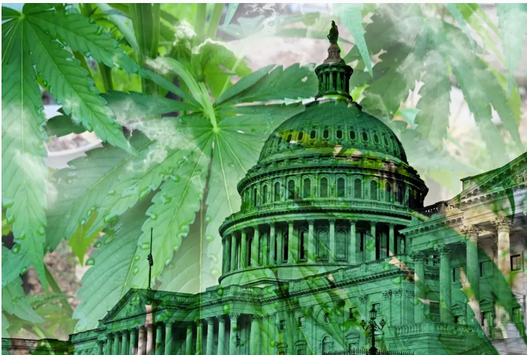
As searches spike for “Is Delta-8 illegal now?” and “What does the new hemp law mean for employers?”, one thing is clear: the U.S. cannabis landscape is entering its biggest shift since the 2018 Farm Bill. Congress has officially redefined hemp under H.R. 5371, closing the loopholes that fueled a billion-dollar Delta-8, THCA, and synthetic cannabinoid market. The changes won’t take effect until November 2026, but the consequences for businesses, drug testing, and state cannabis policy are already unfolding.
Congress’s decision to tighten the legal definition of hemp dramatically narrows what products can remain on the market. While the 2018 Farm Bill allowed hemp with up to 0.3% delta-9 THC, it inadvertently opened the door for hemp-derived intoxicants that didn’t violate that threshold. H.R. 5371 eliminates that pathway by imposing a total THC limit, counting both delta-9 and its precursor THCA. It also prohibits cannabinoids made outside the plant, directly targeting popular intoxicants like delta-8 and delta-10. Even the DEA’s former guidance on cannabis seeds has been reversed, closing the final regulatory loophole.
For the past several years, Delta-8 edibles, THCA flower, and other “legal high” products surged in popularity—especially in states without recreational cannabis markets. But under the new law, most of these products will be federally illegal due to THC caps, manufacturing methods, or their intoxicating effects. A key unresolved question is which cannabinoids will be defined as having effects “similar to THC,” a determination the Secretary of Health and Human Services is required to publish. Until that list arrives, businesses face uncertainty, and consumers face a shrinking, shifting marketplace.
The new hemp definition indirectly gives employers stronger footing in enforcing drug-free workplace rules. Previously, workers who failed THC tests could argue they consumed legal hemp products like Delta-8 or THCA flower. Because most drug tests don’t distinguish cannabinoid sources, those arguments often muddied disciplinary actions. With H.R. 5371 effectively eliminating intoxicating hemp products, employers now have a clearer line: a positive THC test is far harder to dispute. This clarity is especially useful as more companies adopt oral-fluid testing, which detects cannabinoid use more accurately and within shorter time frames.
The Department of Transportation’s long-standing ban on marijuana use for safety-sensitive positions already leaves little room for nuance. But some workers had turned to hemp-derived intoxicants—still technically legal—to comply with federal rules while managing off-duty stress or pain. The new law closes that workaround. While DOT testing procedures remain unchanged, H.R. 5371 strengthens employer authority and reinforces the expectation that safety-sensitive employees avoid all intoxicating cannabinoids, regardless of state laws or hemp marketing claims.
Not all states will align easily with the new federal restrictions. States like Minnesota and Kentucky explicitly allow Delta-8 or THCA products, setting up an inevitable clash with federal enforcement once the law takes effect. Employers operating across state lines will face complex compliance challenges, especially in states with strong protections for lawful off-duty conduct. Litigation is almost certain—both from hemp industry associations and from companies concerned that full-spectrum CBD products with trace THC could be unintentionally swept up in the new framework.
Even with a one-year runway, employers are encouraged to begin policy updates now. Drug-free workplace policies should explicitly address synthetic cannabinoids and clarify that substances soon to be federally prohibited will result in disciplinary action. HR teams will need updated guidance around testing, documentation, and employee communication. Most importantly, employers should monitor the three forthcoming lists required under HHS guidance: naturally occurring cannabinoids, those synthesized outside the plant, and those with THC-like effects. These lists will determine which products remain legal and how to interpret future positive test results.
H.R. 5371 underscores the widening gap between state cannabis reforms and federal law. Even as federal agencies consider rescheduling marijuana, Congress has taken a harder line on hemp-derived intoxicants. For businesses, this shift brings long-awaited clarity but also new compliance burdens and potential workforce impacts. As the hemp and cannabis industries brace for change, employers, regulators, and consumers must prepare for a dramatically different legal landscape—one where the definition of hemp has never mattered more.
𝗦𝗲𝗺𝗮𝘀𝗼𝗰𝗶𝗮𝗹 𝗶𝘀 𝘄𝗵𝗲𝗿𝗲 𝗿𝗲𝗮𝗹 𝗽𝗲𝗼𝗽𝗹𝗲 𝗰𝗼𝗻𝗻𝗲𝗰𝘁, 𝗴𝗿𝗼𝘄, 𝗮𝗻𝗱 𝗯𝗲𝗹𝗼𝗻𝗴. We’re more than just a social platform — from jobs and blogs to events and daily chats, we bring people and ideas together in one simple, meaningful space.



Comments